
Methylation – Doctor’s

$240.00
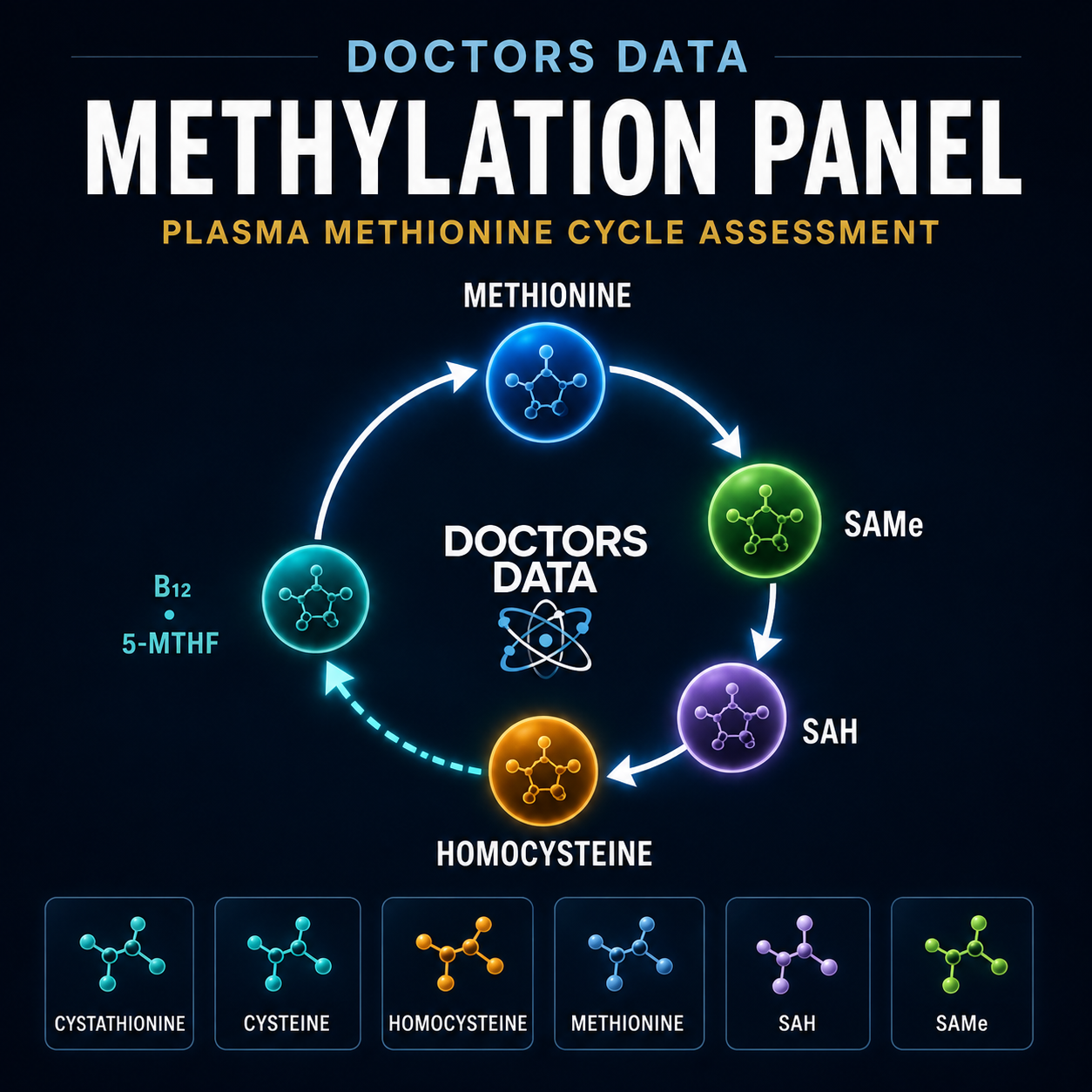
The Doctor’s Data Plasma Methylation Panel measures active methylation chemistry—including SAM, SAH, methionine, homocysteine, cystathionine, and cysteine—to help determine whether undermethylation is present and, more importantly, why methylation may be impaired.
Unlike MTHFR genetics, this test evaluates current biochemical function. It is especially useful when assessing the Walsh Approach to undermethylation and the Five Epigenetic Drivers of Undermethylation: toxin exposure, mitochondrial stress, creatine demand, methylation demand, and acidic pH with impaired clearance.
Description
The Doctor’s Data Plasma Methylation Panel is a functional methylation blood test that measures what your methylation cycle is doing now. Rather than relying only on MTHFR or other genetic variants, it evaluates key metabolites involved in methyl-group production, utilization, recycling, and clearance.
This can be particularly useful when evaluating undermethylation, an important biochemical pattern within the Walsh Approach, or when symptoms and conventional laboratory findings suggest that methylation may not be functioning efficiently.
What Does the Plasma Methylation Panel Measure?
The panel provides a biochemical view of several interconnected portions of the methionine and transsulfuration pathways. Depending on the current Doctor’s Data panel configuration, measurements include important markers such as:
- SAM (S-adenosylmethionine) – the body’s principal methyl donor.
- SAH (S-adenosylhomocysteine) – a product of methylation that can inhibit methyltransferase reactions when it accumulates.
- SAM:SAH ratio – helps assess the relationship between methyl-donor availability and methylation inhibition.
- Methionine – the amino acid used to produce SAM.
- Homocysteine – a central intermediate that can be remethylated back toward methionine or directed toward transsulfuration.
- Cystathionine – provides information about movement of homocysteine through the transsulfuration pathway.
- Cysteine – an important downstream sulfur-containing amino acid and precursor involved in antioxidant metabolism.
Why Test Methylation Biochemistry Instead of Genetics Alone?
Genetic testing can identify inherited variants that may influence methylation, but genes do not necessarily show whether a pathway is currently impaired.
A person may have an MTHFR variant without significant biochemical dysfunction, while another person may have substantial methylation impairment despite relatively unremarkable genetic testing.
The important distinction is genetics versus biochemical performance. The Plasma Methylation Panel measures metabolites within the pathway and can therefore provide information about methylation activity occurring at the time of testing.
For comparison, a commonly used conventional marker is LabCorp Homocyst(e)ine, Test #706994. Homocysteine can be useful, but it represents only one component of the pathway. The Doctor’s Data panel adds SAM, SAH, methionine, and related metabolites that can help explain why methylation may be abnormal. LabCorp confirms that Test #706994 measures plasma or serum homocysteine. :contentReference[oaicite:0]{index=0}
How This Test Helps Assess Undermethylation
Within the Walsh Approach, undermethylation has traditionally been assessed using clinical characteristics together with markers such as whole-blood histamine. Plasma methylation testing can add another layer by directly evaluating methylation chemistry.
Different biochemical patterns can have very different implications. Examples include:
- Low SAM may indicate inadequate methyl-donor availability.
- Low methionine with low SAM may suggest limited substrate availability for SAM production.
- Elevated SAH may inhibit methylation even when SAM itself is not markedly low.
- An unfavorable SAM:SAH relationship may indicate reduced effective methylation capacity.
- Abnormal homocysteine may help identify problems involving remethylation, transsulfuration, nutrient cofactors, oxidative stress, or metabolic demand.
- Cystathionine and cysteine patterns can provide additional information about sulfur metabolism and transsulfuration.
This makes the test useful not simply for asking, “Am I undermethylated?” but for asking the more clinically useful question: “What appears to be interfering with methylation?”
The Five Epigenetic Drivers of Undermethylation
The WalshDoc interpretation expands on the traditional Walsh biochemical framework by considering five acquired or epigenetic pressures that may contribute to impaired methylation:
Toxin Exposure
Detoxification and clearance pathways can increase biochemical demand and contribute to oxidative or metabolic stress that affects methylation.
Mitochondrial Stress
Impaired cellular energy production may affect numerous energy-dependent metabolic pathways and increase compensatory biochemical demand.
Creatine Demand
Endogenous creatine synthesis consumes substantial methyl-group resources. Increased demand can place additional pressure on SAM availability.
Methylation Demand
Neurotransmitter metabolism, phospholipid production, gene regulation, detoxification, and many other processes continuously consume methyl groups.
Acidic pH and Impaired Clearance
When metabolic clearance is inefficient, SAH and related metabolites may accumulate and interfere with effective methylation.
The Plasma Methylation Panel is particularly helpful because it can identify patterns involving SAM availability, SAH accumulation, methionine supply, and homocysteine metabolism that can then be considered alongside these potential drivers.
Why SAH Is Important
SAH is more than a waste product. It is a potent inhibitor of many methyltransferase enzymes. This means that a person may have an apparently reasonable SAM level while methylation remains inefficient because SAH is inadequately cleared.
The SAH hydrolase reaction links SAH with homocysteine and adenosine. Because this reaction is reversible, clearance of these downstream products helps influence movement of the pathway.
This distinction can be important when deciding whether the primary problem appears to involve inadequate methyl-donor production, excessive methylation demand, impaired SAH clearance, or another metabolic pressure.
What Information Can This Test Provide?
Results may help your physician assess:
- Whether SAM production appears adequate.
- Whether SAH accumulation may be inhibiting methylation.
- The functional relationship between SAM and SAH.
- Whether methionine availability may be limiting.
- How homocysteine is behaving within the broader methylation cycle.
- Whether transsulfuration markers suggest altered sulfur metabolism.
- Whether additional evaluation of oxidative stress, mitochondrial function, nutrient status, toxic burden, creatine demand, or metabolic clearance may be appropriate.
The results are most useful when combined with symptoms, history, medications, diet, previous laboratory testing, and other Walsh-related markers such as zinc, copper, ceruloplasmin, whole-blood histamine, vitamin D, and urinary pyrroles.
Before Your Blood Draw
This is not a routine blood sample that should simply be drawn and left at room temperature. Proper collection, processing, freezing, and shipment are important for preserving the methylation metabolites being measured.
- You will receive a Doctor’s Data collection kit with the required tubes and shipping materials.
- Bring the complete kit and its instructions to the blood-draw facility.
- Confirm beforehand that the facility is willing and able to perform the required specimen processing.
- The sample requires plasma preparation and appropriate freezing before shipment.
- Follow the instructions supplied with your specific kit regarding fasting, collection, processing, and shipping.
- Do not discontinue prescription medications or supplements solely for this test unless instructed by your treating clinician or by the laboratory collection instructions.
How the Test Works
1. Receive the Doctor’s Data Kit
The specialized collection kit is sent to you with the materials and laboratory instructions required for testing.
2. Have Your Blood Drawn and Processed
Take the kit to an appropriate phlebotomy facility. The specimen must be collected and processed according to the Doctor’s Data instructions.
3. Send the Specimen to Doctor’s Data
The processed specimen is shipped to Doctor’s Data using the packaging and shipping instructions supplied with the kit.
4. Interpret the Results in Clinical Context
The value of this panel is not simply whether individual markers fall inside a laboratory reference interval. The pattern among SAM, SAH, methionine, homocysteine, and related metabolites is what helps provide a more complete assessment.
Methylation Testing and the Walsh Approach
The traditional Walsh Approach emphasizes biochemical individuality rather than treating psychiatric, cognitive, or behavioral symptoms as a single biochemical disorder.
Plasma methylation testing can help extend that approach by distinguishing a traditional undermethylation phenotype from acquired biochemical influences that may be suppressing methylation.
This can be especially valuable when whole-blood histamine, symptoms, genetics, and treatment response do not appear to tell the same story.
Frequently Asked Questions
Is this the same as an MTHFR test?
No. MTHFR testing looks at specific genetic variants. The Doctor’s Data Plasma Methylation Panel measures metabolites involved in active methylation chemistry, including SAM and SAH.
Can homocysteine alone diagnose undermethylation?
No. Homocysteine is an important methylation-cycle marker, but normal homocysteine does not necessarily mean methylation is functioning optimally. Measuring SAM, SAH, methionine, and related metabolites provides substantially more biochemical information.
What is LabCorp test #706994?
LabCorp Test #706994 is Homocyst(e)ine. It can be useful as one component of a methylation evaluation, but it does not provide the broader pathway information available from a plasma methylation panel.
Why are SAM and SAH measured together?
SAM supplies methyl groups, while SAH can inhibit methylation reactions. Evaluating the relationship between the two provides more information than looking at either value alone.
Can this test determine which supplements I need?
The test can identify biochemical patterns that help guide an individualized assessment, but treatment decisions should also consider symptoms, medications, other laboratory findings, nutrient status, and possible underlying drivers of the methylation abnormality.
Who may benefit from this test?
The panel may be useful when evaluating suspected undermethylation, unexplained homocysteine abnormalities, conflicting genetic and biochemical findings, poor response to prior methylation treatment, or when a more detailed assessment of methylation function is desired.