
Cognitive Health Blood Tests for Dementia and Cognitive Decline
Compare cognitive health blood tests designed to evaluate metabolic, inflammatory, nutritional, genetic and biochemical factors that may contribute to memory problems and cognitive decline. These dementia blood tests include core laboratory testing, inflammation and metabolic markers, gut and celiac testing, nutrient and mineral testing, APOE genetic risk and hormone assessment.
The testing approach combines important elements of the Bredesen Cognoscopy with biochemical markers emphasized in the Walsh Approach. This allows evaluation of glucose and insulin regulation, inflammation, lipids, nutrient status and intestinal health alongside whole-blood histamine, zinc, copper, ceruloplasmin, homocysteine and other markers that may influence methylation and brain function.
Additional testing can be selected according to symptoms, medical history and previous laboratory findings, including APOE genotype, hormones, oxidative stress, methylation and gastrointestinal contributors.
Start with the Cognitive Health Core Panel – Bredesen + Walsh Markers for a broad assessment, then add targeted panels for nutrition, hormones, gut health, inflammation or APOE genetic risk when indicated.


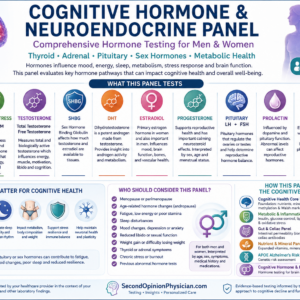




Which Cognitive Health Test Should I Choose? Cognitive Health Core Panel — Bredesen + Walsh Markers Best starting point. Evaluates core metabolic, nutritional, vascular and methylation-related markers including whole-blood histamine, zinc, copper, ceruloplasmin, vitamin D and homocysteine. Cognitive Metabolic & Inflammation Panel Best when insulin resistance, abnormal glucose, cholesterol, obesity, cardiovascular risk or chronic inflammation may be contributing to cognitive decline. Cognitive Gut & Celiac Panel Evaluates gut-barrier, celiac and intestinal markers when digestive symptoms, malabsorption, food reactions or gut-related inflammation are suspected. Cognitive Nutrient & Mineral Panel Provides a deeper assessment of vitamins, minerals and antioxidant nutrients important to neurological function and cellular repair. APOE Alzheimer’s Risk Test Identifies APOE genotype and inherited susceptibility associated with Alzheimer’s disease. APOE status indicates risk—not whether dementia will occur. Bredesen Cognoscopy + Walsh Approach Dr. Dale Bredesen’s Cognoscopy looks broadly for potentially modifiable contributors to cognitive decline rather than assuming Alzheimer’s disease has a single cause. The Walsh Approach adds greater emphasis on biochemical individuality, including methylation tendency, whole-blood histamine, zinc, copper and nutrient patterns. When indicated, SAM/SAH methylation testing can take this assessment further. Learn about the Bredesen Cognoscopy Learn about the Walsh Approach Read: What Causes Dementia? Cognitive Health Testing FAQ What is the best cognitive health blood panel to start with? For most patients testing in stages, the Cognitive Health Core Panel provides the broadest first assessment. More targeted testing can then be added based on the results and clinical history. Are these official Bredesen Cognoscopy panels? No. These are independently developed Second Opinion Physician panels that draw from laboratory areas considered within the Bredesen cognitive-health framework and add selected Walsh Approach markers. Can these blood tests diagnose Alzheimer’s disease? No. These tests evaluate metabolic, nutritional, inflammatory and genetic factors that may influence cognitive health. Alzheimer’s diagnosis may require neurological assessment, cognitive testing, imaging or disease-specific biomarkers. Should I order all five tests? Usually not. The goal is to identify the most relevant testing rather than ordering everything. Starting with core testing and adding targeted panels is often more practical.