
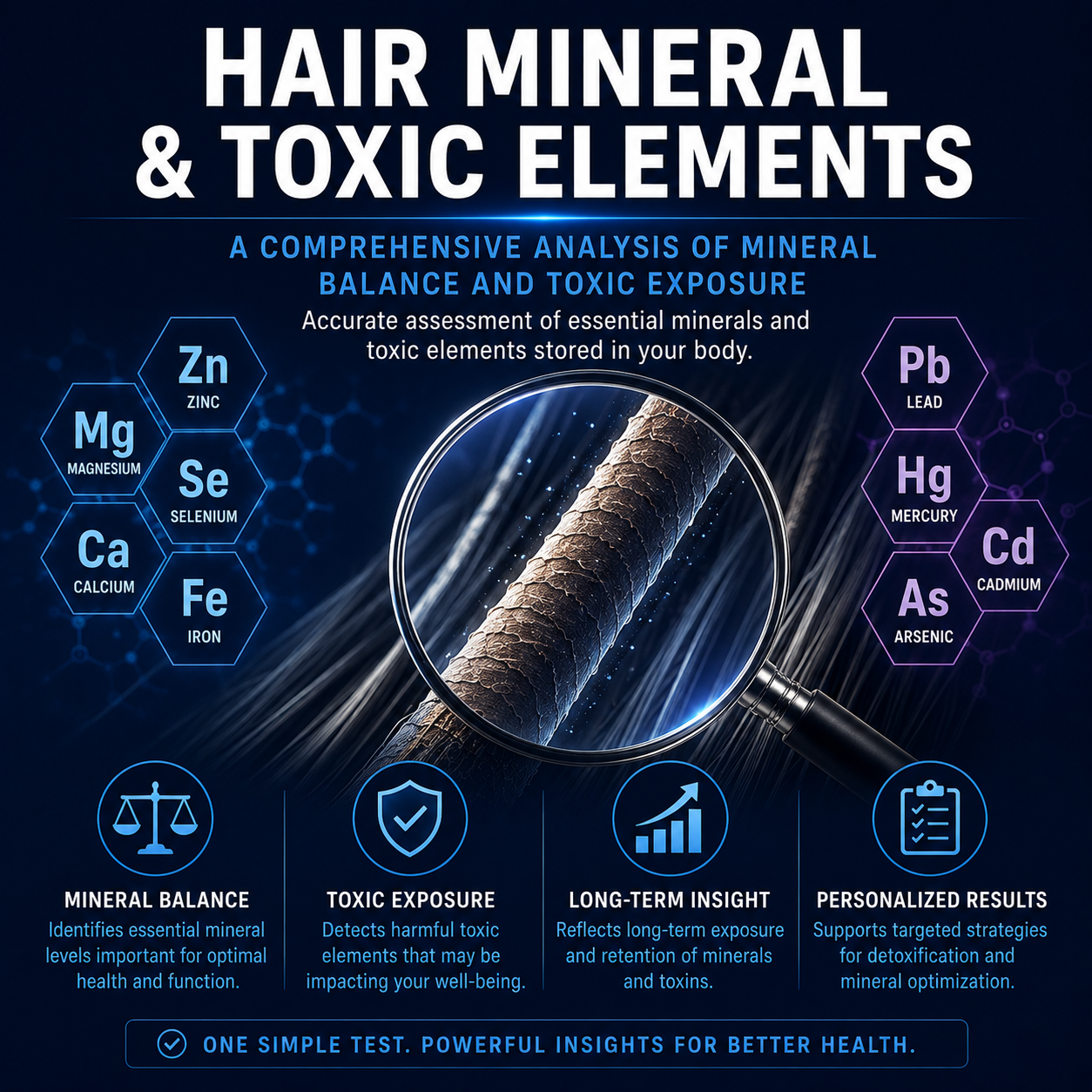
Hair Minerals, Toxins


$198.00
A noninvasive hair analysis that screens for recent or ongoing toxic-element exposure and evaluates selected essential minerals involved in methylation, antioxidant protection, metal regulation and mitochondrial function.
Elements measured: Aluminum, Antimony, Arsenic, Barium, Beryllium, Bismuth, Cadmium, Cesium, Chromium, Cobalt, Copper, Gadolinium, Germanium, Gold, Lead, Manganese, Mercury, Nickel, Palladium, Platinum, Selenium, Silver, Tellurium, Thallium, Thorium, Tin, Titanium, Tungsten, Uranium, Vanadium and Zinc.
Description
The Hair Toxic & Essential Elements Analysis is a noninvasive screening test that evaluates exposure to a broad range of toxic elements while also measuring selected essential minerals.
Hair is an excretory tissue. As the hair shaft forms, elements circulating in the body can become incorporated into the growing strand and remain relatively stable. Because scalp hair grows gradually over time, the sample can provide useful information about recent or ongoing patterns of exposure that may not be apparent from a single blood measurement.
This test is particularly useful when investigating environmental or occupational exposure, unexplained neurologic or cognitive symptoms, oxidative stress, impaired detoxification, or possible metal-related contributions to methylation and mitochondrial stress.
What Does the Hair Elements Test Measure?
The Doctor’s Data Hair Toxic & Essential Elements Analysis evaluates a broad group of toxic and essential elements from a small sample of scalp hair.
Toxic-element screening may include metals such as:
- Mercury
- Arsenic
- Lead
- Cadmium
- Aluminum
- Antimony
- Nickel
- Additional toxic or potentially harmful elements
The profile also measures essential minerals involved in enzyme activity, antioxidant defense, cellular metabolism, and mineral balance.
Why Hair Analysis May Be Useful
Toxic-Metal Exposure
Hair analysis can help identify patterns suggesting recent or ongoing exposure to mercury, arsenic, lead, cadmium, aluminum, antimony, and other elements. Hair mercury is particularly useful when methylmercury exposure from fish or other sources is a concern.
Longer Exposure Window
Blood levels may change relatively quickly following an exposure. Because elements become incorporated into growing hair, hair analysis can provide a broader view of exposure over a period of time.
Essential Mineral Patterns
The test also provides information about essential elements such as zinc, copper, manganese, selenium, and other minerals involved in enzyme activity and cellular function.
Noninvasive Collection
Only a small amount of hair is required, making this test particularly useful when blood collection is difficult or when a broad exposure screen is desired.
Mercury, Arsenic and Other Toxic Elements
One of the most useful applications of hair analysis is identifying possible toxic-element exposure.
Mercury can accumulate in hair and is particularly relevant when evaluating exposure to methylmercury, including exposure associated with frequent consumption of certain fish.
Hair results may also provide useful screening information for arsenic, lead, cadmium, aluminum, antimony, nickel, and other elements. The significance of an elevated result depends on the element, the degree of elevation, symptoms, and the suspected source of exposure.
Hair analysis is a screening test. A significant or unexpected toxic-element result may need confirmation with blood, urine, or another element-specific test before treatment decisions are made.
Copper and Zinc Information
Hair testing also provides copper and zinc results, which can add useful information about overall mineral patterns.
This can be particularly helpful when blood testing is not available or when broader changes in mineral handling are being followed over time.
Within a Walsh-oriented assessment, however, plasma zinc, serum copper, and ceruloplasmin remain the preferred measurements for evaluating copper overload and zinc deficiency.
For comparison, conventional blood testing includes LabCorp Zinc, Serum or Plasma Test #001800 and LabCorp Copper, Serum or Plasma Test #001586. These blood measurements provide more direct information about circulating zinc and copper status. Hair results provide complementary information rather than replacing them.
Hair Elements and the Walsh Approach
The Walsh Approach evaluates biochemical individuality using laboratory findings together with symptoms, history, medication response, and nutrient status.
Hair element analysis can add information when there is concern about:
- Toxic-metal exposure
- Copper and zinc patterns
- Oxidative stress
- Poor detoxification tolerance
- Environmental contributors to persistent symptoms
- Possible metal-related effects on methylation or mitochondrial function
When copper overload is a primary concern, hair results are best interpreted alongside plasma zinc, serum copper, ceruloplasmin, CBC, symptoms, supplement history, and treatment response.
Toxic Metals, Oxidative Stress and Methylation
Toxic elements may increase oxidative stress, interfere with enzyme activity, affect glutathione requirements, and place additional stress on mitochondrial and detoxification pathways.
For patients being evaluated for undermethylation, these findings may provide useful information about one potential epigenetic driver of impaired methylation: toxic or environmental burden.
This can be particularly relevant when there is:
- Elevated SAH
- A reduced SAM-to-SAH ratio
- Persistent undermethylation symptoms
- Poor response to methylation support
- Low glutathione or increased oxidative stress
- Suspected mitochondrial stress
Hair analysis does not measure methylation itself. When methylation function needs to be assessed directly, a dedicated methylation panel measuring methylation metabolites is more appropriate.
Manganese and Mitochondrial Function
Manganese is an essential trace element required for several enzymes, including mitochondrial manganese superoxide dismutase, an important component of antioxidant defense.
Excessive manganese exposure, however, may become biologically disruptive. An abnormal hair manganese result can therefore be useful when there is a relevant environmental, occupational, supplement, or water-exposure history.
Hair manganese is best regarded as a screening marker for manganese exposure or handling, rather than a direct test of mitochondrial function.
What Information Can This Test Provide?
The Hair Toxic & Essential Elements Analysis can help determine:
- Whether there is evidence of increased exposure to one or more toxic elements
- Whether mercury exposure warrants closer evaluation
- Whether arsenic, lead, cadmium, aluminum, or other metals are elevated
- Whether essential mineral patterns deserve additional investigation
- Whether environmental exposure could be contributing to oxidative stress
- Whether toxic burden may be relevant to persistent methylation or mitochondrial stress
- Which abnormal findings may require confirmatory blood or urine testing
Who May Benefit From Hair Element Analysis?
This test may be particularly useful for individuals with:
- Suspected environmental or occupational metal exposure
- Frequent consumption of high-mercury fish
- Unexplained neurologic or cognitive symptoms
- Developmental or behavioral concerns
- Persistent fatigue or poor recovery
- Oxidative-stress concerns
- Possible toxic-overload patterns
- Impaired methylation with suspected environmental contributors
- Difficulty tolerating detoxification or methylation support
- A need for broad toxic-metal screening without a blood draw
Before Collecting Your Hair Sample
Hair products and external contamination can affect element results, so proper sample collection is important.
- Follow the collection instructions included with your Doctor’s Data kit.
- Scalp hair is generally preferred when available.
- The sample should be taken as close to the scalp as directed in the kit instructions.
- Note recent hair coloring, bleaching, permanent treatments, straightening treatments, or other chemical processing.
- Inform your clinician about medicated shampoos, mineral-containing hair products, swimming exposure, occupational dust, smoke, or other possible sources of external contamination.
- Do not apply unusual topical mineral or metal-containing products before collection.
- A small hair sample is required; no blood draw is necessary for this test.
Important Interpretation Considerations
Hair analysis is most useful when interpreted in the context of symptoms and exposure history.
An elevated element may reflect genuine internal exposure, external contamination, altered excretion, or another factor. Conversely, a normal hair result does not rule out every type of toxic exposure.
For this reason, clinically important abnormalities may be followed by targeted blood or urine testing.
Hair analysis should not be used by itself to diagnose copper overload, zinc deficiency, heavy-metal toxicity, metallothionein dysfunction, mitochondrial dysfunction, or impaired methylation. Its value is in identifying patterns and determining where more focused investigation may be useful.
How the Test Works
1. Receive Your Hair Collection Kit
The Doctor’s Data kit is mailed to you with instructions and the materials needed to collect and return the sample.
2. Collect a Small Hair Sample
A small amount of scalp hair is collected according to the instructions supplied with the kit. No blood draw is required.
3. Return the Sample to the Laboratory
The sample is placed in the provided collection materials and shipped to Doctor’s Data for analysis.
4. Review the Element Pattern
Results can be reviewed in relation to symptoms, environmental history, diet, supplements, other laboratory findings, and suspected sources of exposure. Abnormal findings can then guide more specific testing or exposure-reduction strategies.
Frequently Asked Questions
Is hair analysis a heavy-metal test?
Yes. It provides broad screening information for multiple toxic elements, including mercury, arsenic, lead, cadmium, aluminum, antimony, and others. Significant findings may require confirmation with another specimen type.
Is hair testing useful for mercury exposure?
Yes. Hair is particularly useful for evaluating methylmercury exposure over time, including exposure that may occur through frequent consumption of certain fish.
Can hair analysis diagnose copper overload?
No. Hair copper can provide useful supporting information, but plasma zinc, serum copper, and ceruloplasmin are preferred when specifically assessing the Walsh copper-overload pattern.
Does this test measure methylation?
No. Hair analysis may identify toxic or mineral patterns that could contribute to oxidative stress and impaired methylation, but it does not measure methylation directly. SAM, SAH, methionine, homocysteine, and related metabolites require dedicated methylation testing.
Can hair dye or other treatments affect my results?
Yes. Hair dye, bleach, chemical treatments, certain shampoos, swimming-pool chemicals, occupational exposure, dust, smoke, and topical products can potentially affect results. These exposures should be considered when collecting and interpreting the sample.
Do I need a blood draw?
No. This is a noninvasive test using a small sample of hair.