
Genetic Testing vs Functional Testing: Genetics, Epigenetics & What Your Labs Show Now
Genetic testing vs functional testing comes down to two different questions: what biological risks did you inherit, and what is actually happening in your body today? Genetic testing can identify inherited susceptibility, while functional biochemical testing measures current methylation, mitochondrial function, oxidative stress, mineral status, metabolic pathways, kidney function, and other physiologic changes that may be more immediately actionable.
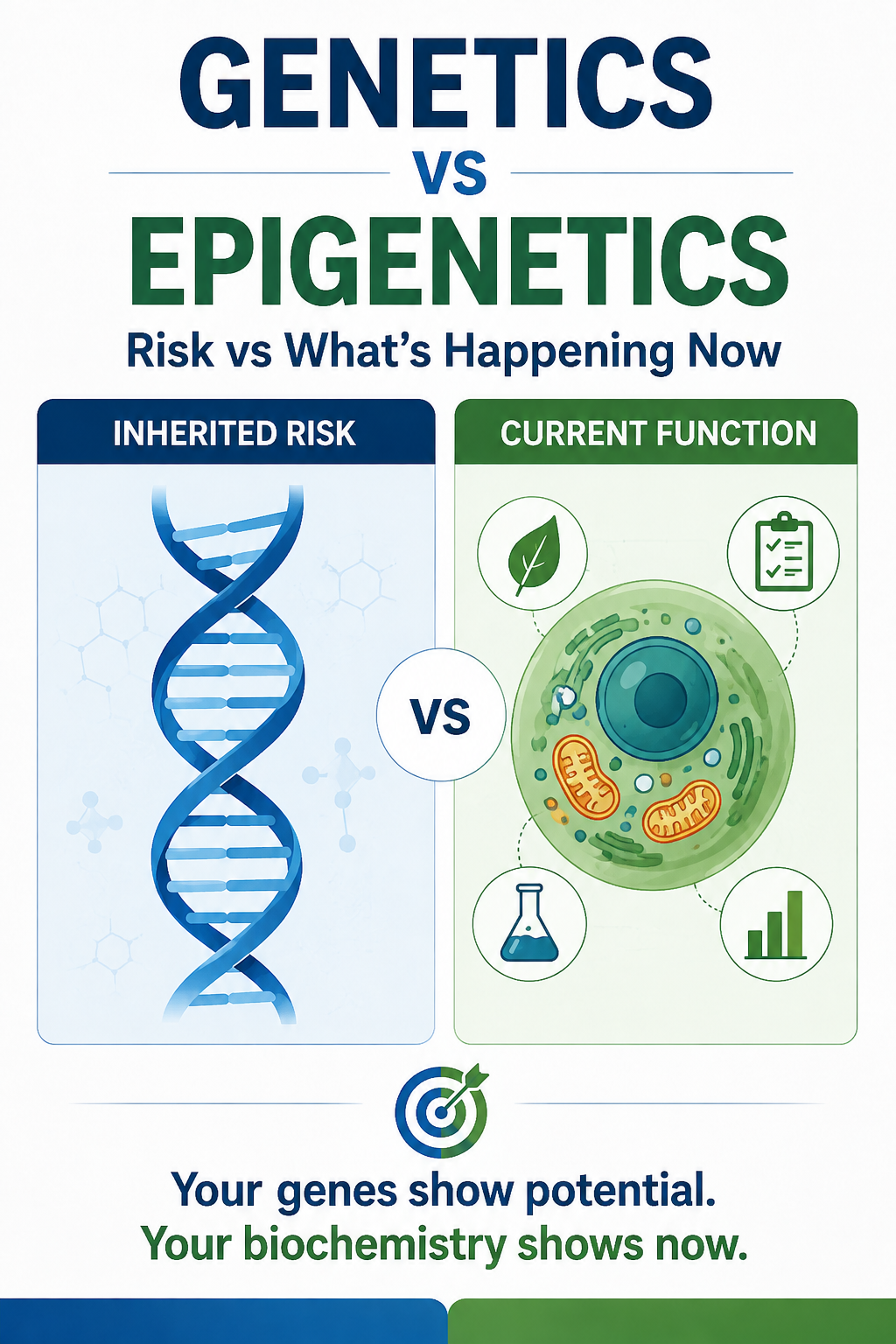

The distinction between genetics vs epigenetics helps explain why two people with similar genetic risks can develop very different symptoms and health outcomes. Genes influence vulnerability, but nutrition, mitochondrial energy, oxidative stress, toxins, inflammation, medications, hormones, kidney function, and methylation can influence how that vulnerability is expressed.
Genetic testing shows inherited potential. Functional biochemical testing shows what is happening now. In many complex chronic conditions, both can be useful—but they answer very different questions.
Genetic Testing vs Functional Testing: Two Different Questions
Main question:
What biological vulnerabilities or inherited traits do you carry?
- Measures inherited DNA variants
- Usually remains unchanged throughout life
- Can identify disease-causing mutations
- Can estimate susceptibility to certain conditions
- Can help with pharmacogenomics
- May predict altered enzyme activity
- Often does not show whether a pathway is currently abnormal
Main question:
What is actually happening in your physiology today?
- Measures current metabolites and biochemical function
- Can change with nutrition, illness, medications and environment
- Can identify mitochondrial dysfunction
- Can identify oxidative damage
- Can identify current mineral imbalance
- Can assess methylation directly
- Can be repeated to measure response to treatment
Why Genetic Risk Is Not the Same as Current Disease
A genetic variant may increase or decrease the probability that a pathway will function differently, but a genetic result alone does not always tell us whether that predicted problem is occurring now.
This is especially important with common SNP testing.
Several additional questions still need to be answered:
- Is the gene variant actually being expressed in a clinically important way?
- Is the associated enzyme or pathway currently impaired?
- Has another pathway compensated for the genetic weakness?
- Are current symptoms actually related to that variant?
- Is the predicted biochemical abnormality measurable?
- Can treatment improve that measurable abnormality?
A genetic test may tell you where to look. Functional testing can show you what you actually find there.
When Genetic Testing Can Be Diagnostic
Genetic testing can be extremely valuable and, in some settings, genuinely diagnostic.
Pathogenic Mutations
Certain genetic variants can confirm or strongly support the diagnosis of an inherited disorder.
Hereditary Susceptibility
Genetics may identify substantially increased risk for certain cancers, cardiovascular disorders, neurologic conditions and other inherited diseases.
Pharmacogenomics
Some genetic variants influence medication metabolism, effectiveness or adverse-effect risk.
The limitations become more important when common SNP reports are used to explain complex problems such as fatigue, anxiety, depression, cognitive decline, inflammation, mitochondrial dysfunction or impaired methylation.
Predictive Genetic Testing Is Different From Measuring Current Function
Many genetic findings are best understood as risk factors or predictors.
They may identify increased susceptibility without proving that disease will develop or that a particular biochemical pathway is currently impaired.
This is why the concepts of clinical validity and clinical utility matter. A genetic test can accurately detect a DNA variant while still leaving unanswered whether the variant explains current symptoms or changes treatment.
Genetics vs Epigenetics: Why the Same Genes Can Produce Different Outcomes
Genetics refers primarily to the DNA sequence you inherit.
Epigenetics refers to regulatory processes that influence how genes are expressed without changing the underlying DNA sequence itself.
Gene expression is influenced by the biochemical environment surrounding the cell.
Vitamins, Minerals & Amino Acids
Nutrients provide substrates and cofactors required for enzymes, mitochondrial energy production, antioxidant defense and methylation.
Cellular Energy
ATP availability influences energy-dependent biochemical reactions and cellular repair.
Cellular Damage
Reactive oxygen species can damage DNA, lipids and proteins and influence cellular signaling.
Environmental Exposure
Metals and other environmental exposures may increase oxidative, mitochondrial and detoxification stress.
SAM & SAH
SAM availability and SAH accumulation directly influence methyltransferase activity.
Kidneys & Metabolism
Renal function, acid-base balance and metabolic clearance influence the internal biochemical environment.
Functional Biochemical Testing Is Not the Same as an Epigenetic Test
This distinction is important.
Tests such as CoQ10, lactate, pyruvate, acylcarnitines, creatine kinase, magnesium, cystatin C, amino acids, 8-OHdG and lipid peroxides are functional biochemical tests. They do not directly measure DNA methylation or histone modification.
They are relevant to epigenetics because they help describe the biochemical environment that can influence gene expression and cellular function.
Genetics describes the inherited blueprint. Functional biochemical testing describes the present metabolic environment in which that blueprint is being expressed.
MTHFR: A Classic Example of Genetic Testing vs Functional Testing
MTHFR is probably the best-known example of a genetic result being interpreted as if it were a direct measurement of methylation.
A person may be told:
“You have an MTHFR variant, so you are undermethylated and need methylfolate.”
But an MTHFR genotype does not directly measure current methylation.
The more useful biochemical questions are:
- What is your SAM?
- What is your SAH?
- What is your SAM:SAH relationship?
- What is your methionine?
- What is your homocysteine?
- Is folate actually low?
- Is B12 adequate?
- Is mitochondrial ATP production adequate?
Two people can carry the same MTHFR variant and have completely different biochemical findings.
Same genotype. Different biochemical phenotype. Different treatment problem.
How Do You Measure Methylation Instead of Predicting It?
Direct methylation-related testing can provide information that an MTHFR SNP cannot.
Important markers include:
- SAM — the principal methyl donor
- SAH — a potent inhibitor of methyltransferase reactions
- SAM:SAH relationship — a useful indicator of methylation potential
- Methionine — precursor for SAM synthesis
- Homocysteine — central to methylation and transsulfuration metabolism
These measurements help answer a more clinically useful question:
Is methylation actually impaired now?
Why Mitochondrial Testing Can Be More Actionable Than a Mitochondrial SNP
A genetic result may suggest vulnerability in mitochondrial energy metabolism. Functional testing asks whether that vulnerability is being expressed now.
Useful mitochondrial markers may include:
- CoQ10
- Lactate
- Pyruvate
- Lactate-to-pyruvate relationship
- Free and total carnitine
- Acylcarnitines
- Organic acids
- Creatine kinase when muscle stress is suspected
- 8-OHdG
- Lipid peroxides
Lactate + Pyruvate
Lactate and pyruvate provide information about glucose-derived energy metabolism, cellular redox balance and mitochondrial function.
Lactate + Pyruvate TestingAcylcarnitines
Acylcarnitine patterns provide information about fatty-acid transport, mitochondrial substrate use and energy metabolism.
Acylcarnitines ProfileCoQ10 Shows Current Mitochondrial Energy Support
CoQ10 is part of the mitochondrial electron transport chain and is required for efficient ATP production.
A genetic report may suggest mitochondrial vulnerability, but it cannot tell you your current circulating CoQ10 level.
CoQ10 testing may be particularly useful with:
- Fatigue
- Poor exercise tolerance
- Muscle symptoms
- Statin therapy
- Cardiovascular concerns
- Mitochondrial dysfunction
- Oxidative stress
- Low-SAM or elevated-SAH patterns
Oxidative Stress: Genetic Risk vs Measurable Damage
A genetic panel may identify variants affecting antioxidant systems. But it cannot tell you whether oxidative damage is actually occurring today.
Antioxidant Gene Variants
May suggest altered susceptibility to oxidative stress or differences in antioxidant capacity.
8-OHdG & Lipid Peroxides
Can provide evidence of current oxidative damage to DNA and lipid membranes.
This distinction matters because treatment should ideally be directed at abnormalities that are actually present rather than problems predicted only from genetic susceptibility.
Test Mitochondrial & Oxidative StressMineral Status Cannot Be Predicted Reliably From Genetics Alone
Genes may influence mineral absorption, transport or metabolism, but genetics cannot tell you today's zinc, copper, magnesium or selenium status.
Actual testing can identify current mineral abnormalities.
Neurotransmitter & Antioxidant Balance
Copper, zinc and ceruloplasmin are central to the Walsh biochemical assessment and can directly alter neurotransmitter and antioxidant physiology.
ATP & Enzyme Function
Magnesium is required for hundreds of biochemical reactions and is closely connected with ATP-dependent metabolism.
Antioxidant Enzymes
Selenium supports important antioxidant enzymes and thyroid-related metabolism.
Kidney Function Is Another Example of Why Current Physiology Matters
Kidney function changes over time.
A genetic variant may increase susceptibility to renal dysfunction, but present kidney function is influenced by age, blood pressure, metabolic disease, medications, vascular health and other factors.
Current measurements such as:
- Creatinine
- Cystatin C
- Estimated filtration
- Bicarbonate
- Electrolytes
show what the kidneys are doing now.
Cystatin C Kidney Function TestCreatine Kinase Measures Current Muscle Stress
Genetics may influence muscle metabolism or susceptibility to certain muscle disorders, but a genetic test cannot tell you whether muscle injury or significant muscle-cell stress is occurring today.
Creatine kinase can provide current information about muscle-cell injury and may be useful with:
- Muscle pain
- Muscle weakness
- Exercise intolerance
- Statin-associated symptoms
- Suspected metabolic or mitochondrial muscle stress
The Five Epigenetic Drivers: Why Acquired Biochemistry Matters
The distinction between inherited genetic potential and current biochemical function is central to the Five Epigenetic Drivers of Undermethylation.
A person may inherit a genetic tendency toward impaired methylation yet remain well compensated for decades.
Another person may develop an acquired undermethylation pattern through metabolic pressures even without an obvious major genetic variant.
Toxic Burden
Metals and environmental exposures can increase oxidative, detoxification and repair demands.
Mitochondrial Stress
Reduced ATP availability can impair energy-dependent metabolism, including synthesis of SAM.
Creatine Demand
Endogenous creatine production consumes substantial SAM-dependent methyl groups.
High Methylation Demand
Repair, neurotransmitter metabolism and other biochemical processes can increase methyl-group demand.
Acid-Base & Clearance Stress
Kidney function, pH regulation and metabolic clearance may influence SAH, homocysteine, adenosine and the broader methylation environment.
Genetic Testing vs Functional Testing for APOE4
APOE4 is another useful example.
APOE testing can identify increased inherited risk for Alzheimer's disease, but it cannot tell you whether a person currently has:
- Insulin resistance
- Inflammation
- High homocysteine
- Oxidative damage
- Abnormal lipid metabolism
- Mitochondrial dysfunction
- Mineral deficiencies
- Impaired methylation
- Renal dysfunction
- Toxic burden
APOE4 can identify who deserves closer attention. Functional testing helps identify what deserves attention now.
What Functional Testing Can Measure That Genetics Cannot
| Clinical Question | Current Functional Markers |
|---|---|
| Is methylation actually impaired? | SAM, SAH, SAM:SAH relationship, methionine, homocysteine |
| Is mitochondrial energy metabolism stressed? | CoQ10, lactate, pyruvate, acylcarnitines, carnitine, organic acids |
| Is oxidative damage occurring? | 8-OHdG, lipid peroxides and related oxidative-stress markers |
| Are minerals abnormal? | Zinc, copper, ceruloplasmin, RBC magnesium, selenium and related markers |
| Is muscle injury present? | Creatine kinase and related muscle markers |
| Is fatty-acid metabolism impaired? | Acylcarnitines and free/total carnitine |
| Are amino-acid pathways abnormal? | Plasma or urine amino-acid profiles |
| Is kidney clearance impaired? | Creatinine, cystatin C, electrolytes, bicarbonate |
| Is the internal metabolic environment unfavorable? | CO₂/bicarbonate, renal markers, minerals and metabolic markers |
Genetic Testing Cannot Tell You Whether Treatment Worked
This may be the most important practical distinction.
Your DNA generally remains the same after treatment.
Functional markers can change.
Measure → Treat → Retest → Compare.
A patient may begin with:
- Low CoQ10
- High lactate
- Abnormal pyruvate
- Abnormal acylcarnitines
- Elevated 8-OHdG
- High lipid peroxides
- Low SAM
- Elevated SAH
- Low zinc
- High copper
- Low RBC magnesium
- Reduced kidney filtration
Those abnormalities can be measured again after treatment.
The clinician can then determine whether the physiology actually improved.
Genetic Testing vs Functional Testing: Which Is More Useful?
The answer depends on the question.
Best for Understanding Inherited Risk
- Inherited diseases
- Familial conditions
- Pathogenic mutations
- APOE and meaningful disease-risk variants
- Pharmacogenomics
- Inherited susceptibility
Best for Understanding Current Physiology
- Whether a pathway is abnormal now
- Why symptoms may be occurring now
- Whether mitochondrial stress is present
- Whether oxidative damage is occurring
- Whether minerals are deficient or excessive
- Whether methylation is actually impaired
- Whether treatment improved the abnormality
Why Genetic Testing and Functional Testing Work Best Together
The most useful model is often not genetics versus biochemistry.
It is genetics plus biochemistry.
Genetic testing identifies vulnerability.
Functional testing shows whether that vulnerability is being expressed.
Repeat testing shows whether treatment changed the physiology.
This is especially important in complex chronic conditions where health reflects the interaction of genetics with nutrition, environment, mitochondrial function, oxidative stress, inflammation, hormones, methylation, kidney function and aging.
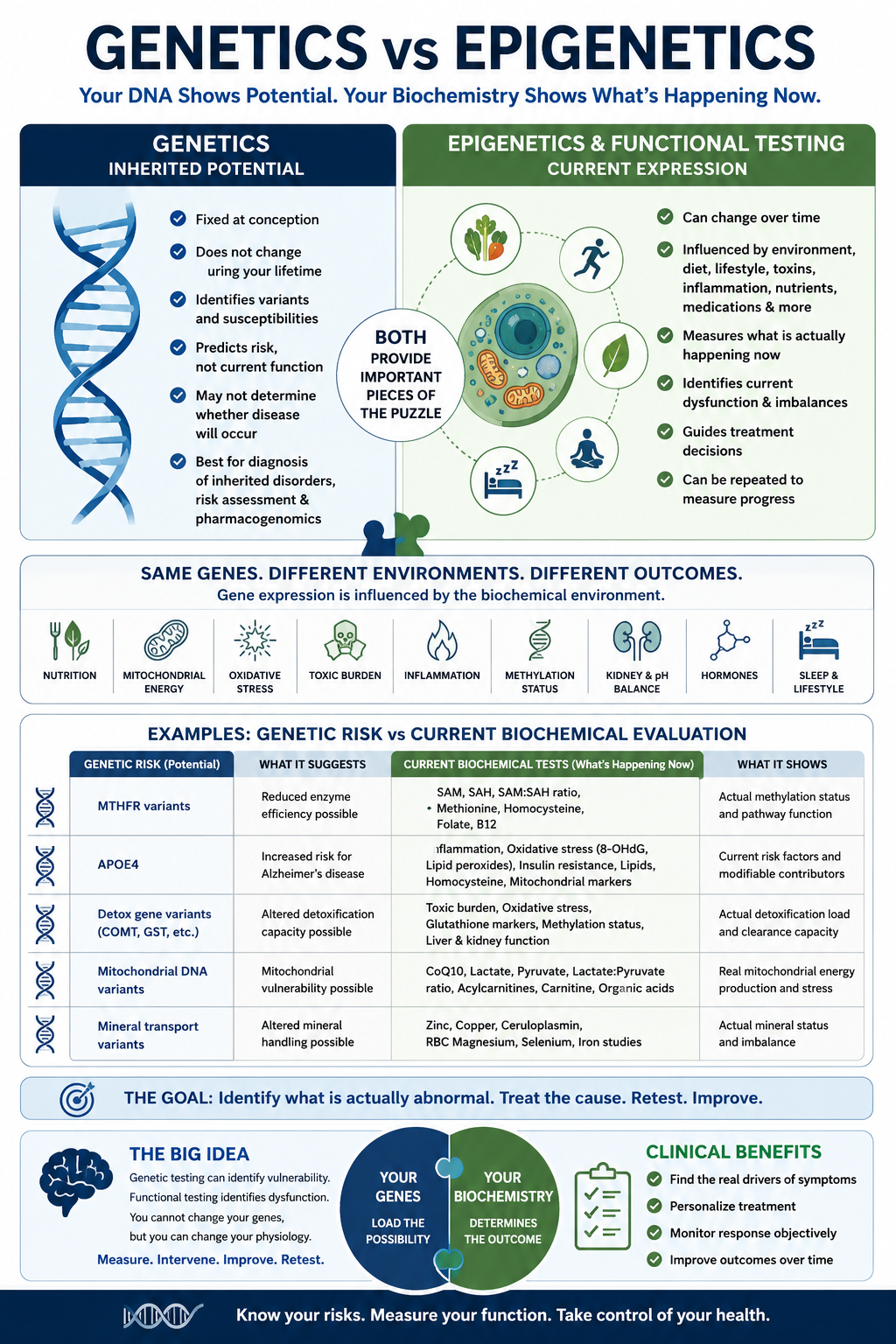
Functional Testing Options for Current Biochemical Function
SAM / SAH Testing
Measures current methylation-related metabolites rather than predicting methylation from genetics alone.
Methylation PanelAdvanced Mitochondrial Testing
Evaluates mitochondrial energy metabolism and oxidative stress using current biochemical markers.
Advanced Mitochondrial PanelLactate + Pyruvate
Helps assess current glucose-derived energy metabolism and mitochondrial redox balance.
Lactate + PyruvateAcylcarnitines
Evaluates current mitochondrial fatty-acid transport and substrate metabolism.
Acylcarnitines ProfileMitochondrial, Gut & Metabolic Panel
Provides a broader view of organic acids, metabolism, mitochondrial function and related biochemical pathways.
Mitochondrial, Gut & Metabolic PanelCystatin C
Provides additional information about current kidney filtration and metabolic clearance.
Cystatin CRBC Magnesium
Provides information about intracellular magnesium status relevant to ATP, muscle and enzyme function.
RBC MagnesiumCreatine Kinase
Provides information about current muscle-cell stress or injury.
Creatine KinaseFrequently Asked Questions About Genetic Testing vs Functional Testing
What is the difference between genetic testing and functional testing?
Genetic testing identifies inherited DNA variants and susceptibility. Functional testing measures current biochemical and physiologic function, such as methylation, mitochondrial metabolism, oxidative stress, mineral status and kidney function.
Is genetic testing predictive or diagnostic?
It can be either. Some pathogenic genetic variants are highly diagnostic for inherited diseases. Many common SNPs and polygenic risk results are better understood as predictors of susceptibility rather than proof that a condition or biochemical abnormality is currently present.
What is the difference between genetics and epigenetics?
Genetics refers to the DNA sequence you inherit. Epigenetics refers to mechanisms that influence gene activity without changing the underlying DNA sequence. Nutrition, methylation, inflammation, oxidative stress, hormones and environmental exposures can influence the cellular environment in which gene expression occurs.
Are functional lab tests the same as epigenetic tests?
No. Tests such as CoQ10, lactate, pyruvate, acylcarnitines, magnesium, creatine kinase, cystatin C and oxidative-stress markers are functional biochemical tests. They are relevant to epigenetics because the metabolic environment they measure can influence gene expression and cellular function.
Does an MTHFR variant prove that I am undermethylated?
No. An MTHFR variant indicates genetic potential for altered folate metabolism but does not directly measure current methylation. SAM, SAH, methionine and homocysteine provide more direct information about current methylation-related biochemistry.
What tests can measure methylation directly?
SAM, SAH, the SAM:SAH relationship, methionine and homocysteine provide current biochemical information about methylation. These results can be interpreted together with nutrient status and clinical findings.
Can mitochondrial function be tested?
Yes. CoQ10, lactate, pyruvate, carnitine, acylcarnitines, organic acids and oxidative-stress markers can provide information about current mitochondrial energy metabolism and related biochemical stress.
What do lactate and pyruvate tell you?
Lactate and pyruvate provide information about glucose-derived energy metabolism, cellular redox balance and mitochondrial function. They may help determine whether a suspected mitochondrial problem is being expressed biochemically.
What do acylcarnitines measure?
Acylcarnitine patterns provide information about fatty-acid transport and mitochondrial substrate metabolism. Abnormal patterns may reveal impaired energy metabolism that cannot be determined from genetic susceptibility alone.
Can genetics tell me whether I have oxidative stress?
No. Genetics may identify susceptibility to impaired antioxidant defenses, but current oxidative damage is evaluated with biochemical markers such as 8-OHdG, lipid peroxides and related oxidative-stress measurements.
Why test minerals if I already have genetic results?
Genes may influence mineral handling, but they cannot tell you your current zinc, copper, magnesium or selenium status. Direct laboratory testing identifies actual current deficiencies or excesses.
Does APOE4 mean Alzheimer's disease is inevitable?
No. APOE4 increases inherited risk but does not determine outcome. Current metabolic, inflammatory, vascular, mitochondrial, nutritional and lifestyle factors can still vary substantially between people with the same APOE genotype.
Can functional testing show whether treatment is working?
Yes. Unlike genetic results, many biochemical markers can change. Methylation markers, minerals, oxidative-stress markers, mitochondrial markers and kidney measurements can be repeated to determine whether physiology improved after treatment.
Should genetic testing and functional testing be used together?
Often yes. Genetics can identify inherited vulnerabilities, while functional testing can determine whether those vulnerabilities are currently being expressed and which biochemical abnormalities may be actionable.
The Bottom Line: Genetic Risk vs Current Biochemistry
Your genes show what may be possible. Your current biochemistry shows what is happening now.
For complex chronic conditions, genetic susceptibility is only part of the picture.
Current methylation, mitochondrial function, oxidative stress, minerals, amino acids, kidney function, metabolic status and environmental exposures can all influence the phenotype that ultimately develops.
Genetic testing identifies potential. Functional biochemical testing identifies current function. Together they provide a more complete picture.