
Description
Genova Methylation Panel (Functional – Non-Genetic)
Advanced Testing for Mood, Behavior, and Walsh-Based Biochemical Assessment
This panel is a core tool used in my clinical approach for patients seeking a Walsh-based evaluation of mood, behavior, and cognitive function.
Unlike genetic testing, this panel evaluates active biochemical function using plasma and whole blood markers. It provides insight into how methylation, detoxification, oxidative stress, and neurotransmitter regulation are functioning in real time.
For patients pursuing the Walsh approach, this test is particularly valuable in identifying toxic overload patterns, methylation inefficiency, and downstream pathway stress that directly influence mental health.
Why This Test Matters for Mood and Behavior
Methylation plays a central role in regulating neurotransmitters, including serotonin and dopamine.
- Methylation influences SERT (serotonin transporter) and DAT/DERT (dopamine transporter) activity
- Imbalances can affect reuptake dynamics, altering how long neurotransmitters remain active in the synapse
- This directly impacts mood stability, anxiety, motivation, focus, and emotional regulation
In Walsh-based models:
- Undermethylation is often associated with low serotonin activity and increased reuptake
- Overmethylation may reflect excessive synaptic activity and poor tolerance to certain interventions
This panel helps clarify these patterns by showing how efficiently methylation is functioning—not just whether a gene variant exists.
Identifying Toxic Overload and Methylation Bottlenecks
A major focus of my work is identifying toxic burden and metabolic stress, which often impair methylation regardless of genetic status.
This test helps identify:
- Elevated SAH (S-adenosylhomocysteine) → a key marker of methylation blockage
- Homocysteine patterns reflecting impaired pathway flow
- Low methionine or methyl donor availability
- Imbalance between methylation and transsulfuration pathways
When SAH is elevated, it acts as a functional brake on methylation, even if SAM levels appear adequate.
Mitochondria, Methyl Demand, and Creatine
Methylation is not just about supply—it is also about demand.
A significant portion of methyl groups are used for creatine synthesis, which is closely tied to mitochondrial energy production.
This panel helps determine whether:
- Methyl groups are being excessively consumed (e.g., high creatine demand)
- Mitochondrial function may be influencing methylation efficiency
- There is a mismatch between methyl production and utilization
This is critical in patients with fatigue, poor resilience, or chronic stress patterns.
Transsulfuration and Glutathione Production
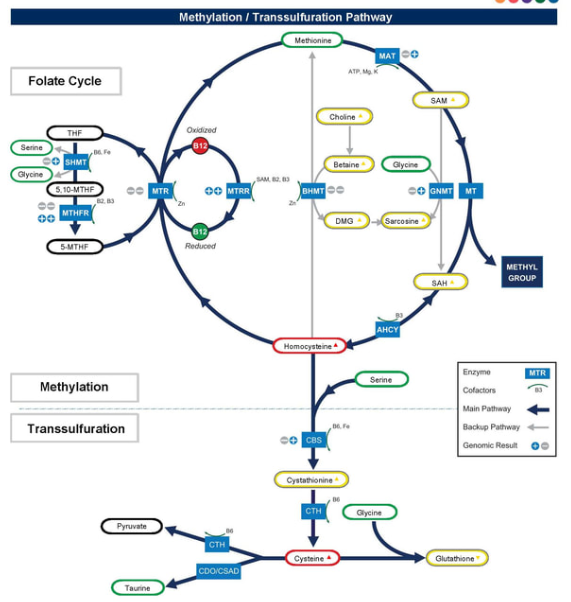
Methylation is directly connected to the transsulfuration pathway, which leads to glutathione production—the body’s primary antioxidant.
This panel evaluates:
- Cysteine and cystathionine levels
- Glutathione status
- Glycine availability
These markers help determine whether the body can effectively:
- Manage oxidative stress
- Detoxify environmental toxins
- Maintain redox balance
Low glutathione or impaired sulfur metabolism often correlates with:
- Increased inflammation
- Chemical sensitivity
- Poor detoxification capacity
Detoxification, Inflammation, and Methylation
Detox capacity is essential for restoring proper methylation function.
This panel provides insight into key drivers of inflammation and metabolic stress:
- Elevated SAH → inhibits methylation enzymes
- Homocysteine → associated with vascular and neurologic stress
- Low glutathione → reduced antioxidant defense
When these are present, simply adding methyl donors is often ineffective or poorly tolerated.
Instead, the goal is to identify and correct bottlenecks, allowing methylation to function naturally and efficiently.
What This Test Measures
Ratios and pathway balance
- SAM/SAH ratio (methylation efficiency)
- Methylation balance ratio
- Methionine / sulfur balance
- Betaine / choline ratio
Methyl donors
- SAM
- Methionine
- Choline
- Betaine
- Serine
Methylation metabolites
- SAH
- Homocysteine
- DMG
- Sarcosine
- Glycine
Transsulfuration and antioxidant markers
- Cystathionine
- Cysteine
- Taurine
- Glutathione
Genetics vs Functional Testing
This panel does not include genetic testing.
Genetic tests show potential tendencies. This test shows actual biochemical activity.
In many cases, functional data provides clearer direction for treatment—especially when symptoms do not align cleanly with genetic findings.
Who This Test Is For
This panel may be appropriate for individuals with:
- Depression, anxiety, OCD, or mood instability
- Poor stress tolerance or inner tension
- Attention, focus, or motivation issues
- Cognitive decline or memory concerns
- Fatigue or low resilience
- Chemical sensitivity or suspected toxic exposure
- Incomplete response to medications or supplements
It is especially useful for patients pursuing a Walsh-based nutrient therapy approach where precise biochemical targeting is needed.
How This Guides Supplement Strategy
This test is used to guide decisions regarding:
- Whether methylation support is appropriate
- When methyl donors (e.g., SAMe, methionine, TMG) may or may not be beneficial
- Whether to focus first on detoxification and glutathione support
- How to balance methylation vs transsulfuration
In many cases, improving detox capacity and reducing pathway stress leads to better tolerance and effectiveness of methylation support.
Sample Type
Plasma and whole blood