
Description
Culture, PCR + Parasitology (CPP) – Comprehensive Stool Analysis
Advanced Microbiome & Pathogen Testing | 6–8 Day Turnaround
The Culture, PCR + Parasitology (CPP) profile is a comprehensive stool analysis designed to identify microbial imbalance, pathogenic bacteria, yeast overgrowth, and parasitic infection using both traditional culture methods and advanced PCR technology.
This test provides objective data about intestinal microflora status and helps guide targeted treatment strategies when infection or dysbiosis is suspected.
Why This Test Matters
The intestinal microbiome plays a central role in:
- Immune regulation
- Inflammatory signaling
- Nutrient synthesis and absorption
- Gut barrier integrity
- Neuroimmune signaling (gut–brain axis)
Imbalances in beneficial and commensal bacteria — known as dysbiosis — may contribute to both gastrointestinal symptoms and systemic conditions.
The CPP panel helps determine whether symptoms may be related to:
- Pathogenic bacterial overgrowth
- Clostridium species imbalance
- Yeast or fungal overgrowth
- Parasitic infection
- Reduction in protective beneficial flora
Unlike limited stool screens, this panel combines:
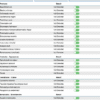
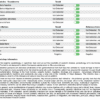
- Comprehensive bacteriology culture
- PCR-based pathogen detection (12–25 GI targets)
- Yeast culture
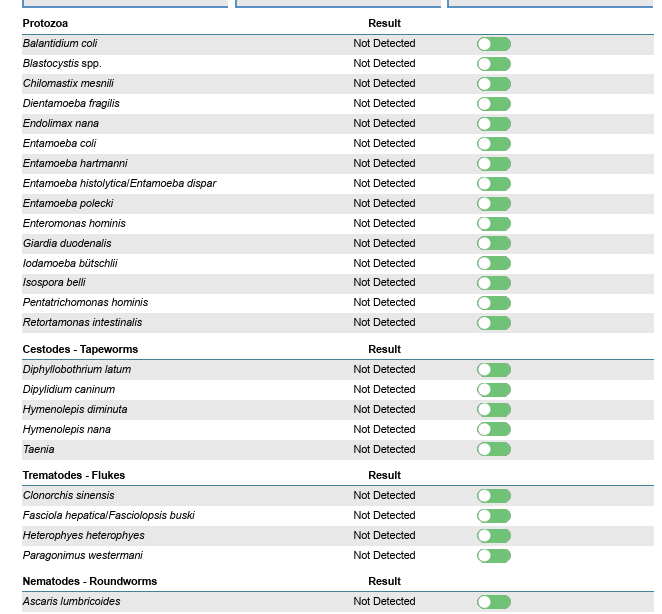
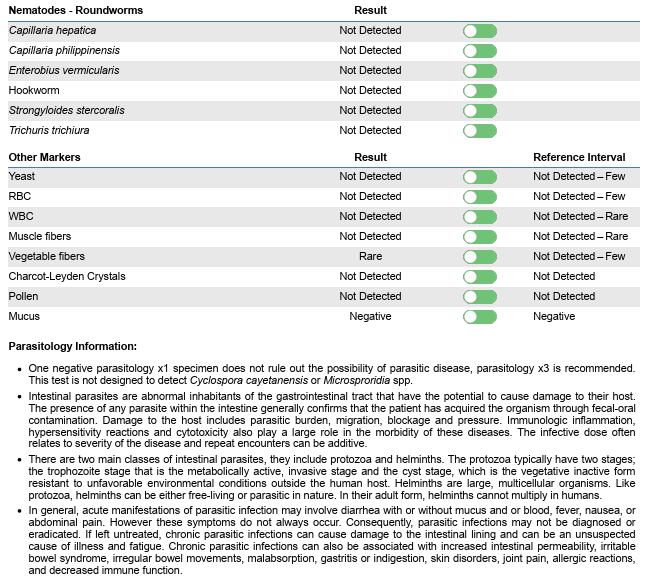
- Microscopy-based parasitology
- Antimicrobial susceptibility testing
What This Panel Evaluates
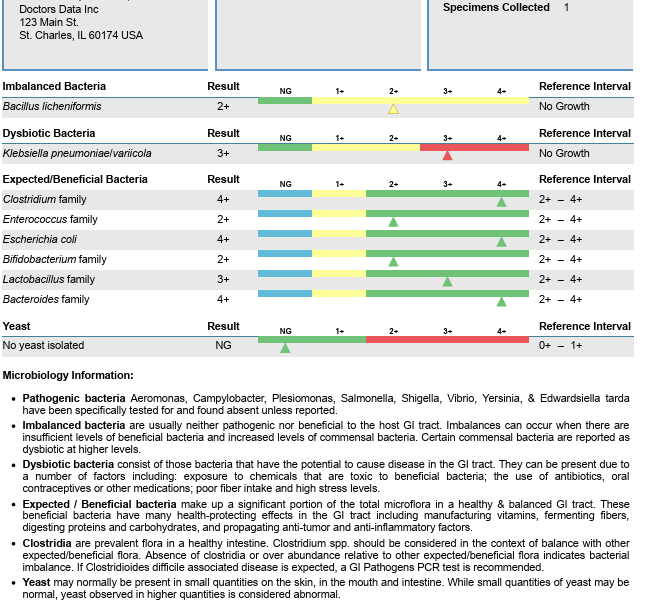
1. Beneficial & Commensal Flora
The test evaluates levels of:
- Lactobacillus species
- Bifidobacteria
- Beneficial E. coli
Healthy levels of these organisms are associated with:
- Inhibition of pathogenic microbes
- Production of short-chain fatty acids (SCFAs)
- Support of immune modulation
- Contribution to certain B-vitamin synthesis
Reduced beneficial flora may permit pathogen overgrowth and contribute to chronic symptoms.
2. Dysbiotic & Pathogenic Bacteria
Culture and PCR methods detect:
- Imbalanced commensal organisms
- Clostridium species
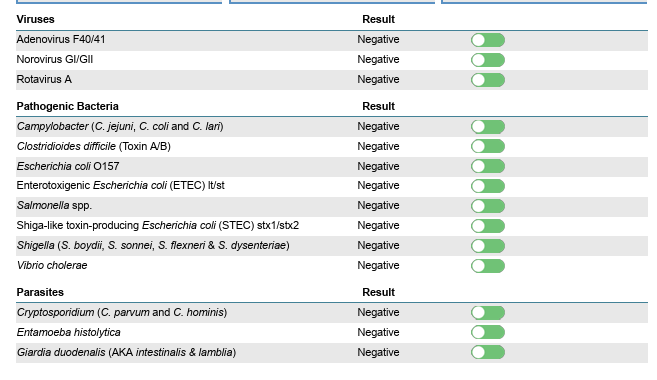
- Enteric pathogens
Precise organism identification allows for more targeted therapy rather than empiric treatment.
3. Antimicrobial Susceptibility Testing
For cultured bacterial and fungal species, susceptibility testing is performed against:
- Prescription antimicrobial agents
- Select natural agents
This helps guide therapeutic decisions based on organism sensitivity patterns.
4. Yeast & Fungal Overgrowth
Yeast such as Candida species may contribute to:
- Bloating and diarrhea
- Recurrent gastrointestinal discomfort
- Fatigue
- Skin or immune reactivity
- Post-antibiotic symptoms
Identification of abnormal fungal levels helps determine whether antifungal therapy may be appropriate.
5. Parasitology (Microscopy + PCR)
Parasitic testing includes concentration techniques and trichrome staining to detect:
- Protozoa
- Helminths
- Ova
Parasitic infection may present with:
- IBS-like symptoms
- Bloating and gas
- Fatigue
- Anemia
- Joint or muscle discomfort
- Sleep disturbance
- Immune activation
Collection may be performed over one-, two-, or three-day intervals based on clinical suspicion.
How Dysbiosis May Affect Methylation, Copper & Inflammation
Although the CPP panel focuses on microbial balance and infection detection, findings often have broader biochemical implications.
Chronic dysbiosis and infection may contribute to:
Increased Inflammatory Signaling
Pathogenic bacteria and parasites can stimulate cytokine production and systemic inflammation.
Copper Dysregulation
Inflammation may alter ceruloplasmin production and zinc absorption, potentially worsening zinc:copper imbalance patterns.
Increased Oxidative Stress
Chronic microbial imbalance increases metabolic stress, which may raise demand on methylation and glutathione pathways.
Gut Barrier Disruption
Overgrowth of pathogens may reduce protective microbial metabolites and compromise intestinal barrier integrity.
In patients with mood instability, autoimmune disease, chronic fatigue, or biochemical imbalances, untreated dysbiosis may contribute to persistent symptoms.
When This Test Is Useful
The CPP panel may be appropriate for patients with:
- Chronic bloating, gas, constipation, or diarrhea
- IBS or suspected infection-related symptoms
- Autoimmune disease
- Chronic fatigue
- Food sensitivities
- Inflammatory patterns
- Nutritional deficiencies
- History of travel or suspected parasitic exposure
- Poor response to probiotics or empiric antimicrobials
Collection & Preparation
- Stool collection kit shipped directly to you
- No fasting required
- Follow kit instructions carefully
- Avoid antimicrobial agents unless directed
- Multi-day collection may be recommended
Samples are returned directly to the laboratory using prepaid packaging.
Turnaround Time
Results are typically available within 6–8 business days.
Delays may occur due to confirmation testing or holidays.
Test Components & Reference Information
| Component | CPT Code | List Price |
|---|---|---|
| Bacteriology culture, aerobic | 87045 | $57 |
| Additional pathogen culture | 87046 | $40 |
| GI Pathogens PCR (12–25 targets) | 87507 | $181 |
| Yeast culture | 87102 | $46 |
| Parasitology, concentrate | 87177 | $24 |
| Parasitology, trichrome | 87209 | $33 |
| Muscle fibers | 89160 | $17 |
Total List Price: $398
Which Stool Test Is Right for Me?
Choose CPP if your main concern is identifying infection or microbial imbalance.
CPP is best for:
- Suspected bacterial overgrowth
- Yeast symptoms
- Possible parasite exposure
- IBS-type symptoms
- Post-travel illness
- Persistent bloating, gas, or irregular stools
It answers:
“Is there an infection or imbalance in my gut?”
Consider CSAP if you want a broader digestive evaluation.
CSAP includes everything in CPP plus markers of:
- Intestinal inflammation
- Digestive enzyme function
- Malabsorption
- Gut immune activity (sIgA)
- Short-chain fatty acids
It answers:
“Is my digestive system functioning properly overall?”
If unsure, we can guide you based on your symptoms.