
FSH and LH Testing
When evaluating estrogen levels, it is often helpful to measure FSH (Follicle Stimulating Hormone) and LH (Luteinizing Hormone) at the same time. Estrogen alone only shows the amount of hormone circulating in the blood. FSH and LH help explain how the body is regulating those hormone levels and where a potential imbalance may originate.
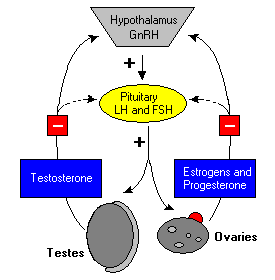
FSH and LH are produced by the pituitary gland in the brain and control the function of the ovaries in women and the testes in men. Together they are part of the hypothalamic–pituitary–gonadal (HPG) axis, the hormonal system that regulates reproductive hormones.
By measuring estrogen along with FSH and LH, it becomes easier to determine whether hormone changes are coming from the reproductive organs themselves or from signals originating in the brain.
How These Hormones Work
Luteinizing Hormone (LH) stimulates hormone production in the reproductive organs.
-
In women, LH helps trigger ovulation and supports estrogen and progesterone production.
-
In men, LH stimulates the testes to produce testosterone, which can then be converted to estrogen in small amounts.
Follicle Stimulating Hormone (FSH) supports reproductive cell development.
-
In women, FSH stimulates ovarian follicles and contributes to estrogen production.
-
In men, FSH supports sperm production and overall testicular function.
Because these hormones come from the brain and act on the reproductive organs, measuring them helps determine whether hormone changes are due to ovarian/testicular function or pituitary signaling.
What the Tests Can Reveal in Women
For women, measuring estrogen with FSH and LH helps evaluate:
-
Ovarian function
-
Perimenopause or menopause
-
Ovarian reserve and fertility status
-
Hormonal imbalance or estrogen dominance
-
Pituitary or hypothalamic suppression
For example:
High FSH and LH with low estrogen may indicate menopause or reduced ovarian reserve.
Low FSH and LH with low estrogen may indicate suppression of the brain’s hormonal signaling, which can occur with stress, illness, or metabolic disruption.
What the Tests Can Reveal in Men
Although estrogen levels are lower in men, they remain important for bone health, brain function, and metabolic balance. Most estrogen in men is produced by conversion of testosterone.
Testing estrogen together with FSH and LH helps evaluate:
-
Testosterone-to-estrogen balance
-
Testicular function
-
Excess aromatization of testosterone to estrogen
-
Pituitary signaling to the testes
For example:
High estrogen with low LH may indicate excess conversion of testosterone to estrogen, sometimes associated with metabolic or weight-related factors.
Low estrogen with high LH may indicate testicular dysfunction, where the brain is attempting to stimulate hormone production but the testes are not responding adequately.
Why These Tests Are Useful
Measuring estrogen alone cannot determine why hormone levels are abnormal. Adding FSH and LH provides important context by showing whether the brain’s hormonal signals are appropriately regulating reproductive hormone production.
Together, these tests help identify whether an imbalance originates from:
-
The ovaries (in women)
-
The testes (in men)
-
Pituitary or hypothalamic signaling
-
Hormone conversion processes in the body
-
Age-related hormonal changes
This information helps guide further evaluation and treatment decisions.
CPT Codes for Testing
Common laboratory billing codes for these tests include:
-
Follicle Stimulating Hormone (FSH) – CPT 83001
-
Luteinizing Hormone (LH) – CPT 83002
These tests are often ordered together as part of a reproductive hormone evaluation or endocrine assessment.