
CMV Antibody Test


$36.00
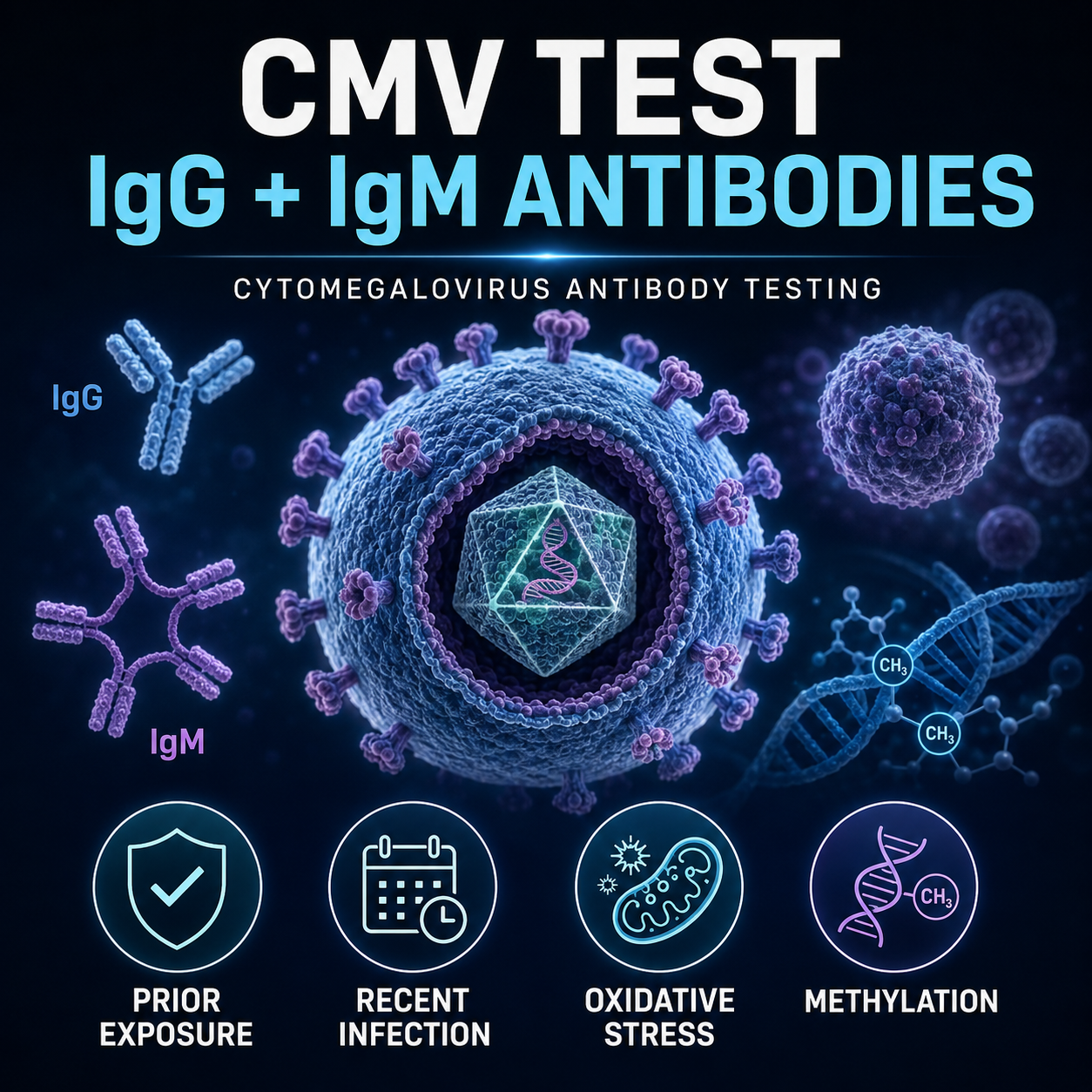
CMV IgG and IgM antibody testing helps evaluate prior Cytomegalovirus exposure and possible recent infection or reactivation. CMV can cause a mononucleosis-like illness with fatigue, lymphocytosis, atypical lymphocytes and prolonged post-viral symptoms. Persistent immune activation may also increase oxidative stress, mitochondrial demand, glutathione requirements and pressure on methylation pathways.
Description
Cytomegalovirus (CMV) is a common herpesvirus that usually causes little or no illness during the initial infection, then remains latent in the body for life.
When symptoms do occur, CMV may resemble infectious mononucleosis, producing fever, malaise, muscle aches, swollen lymph nodes, abnormal liver enzymes and sometimes profound or prolonged fatigue.
The CMV IgG and IgM antibody profile can help distinguish evidence of prior exposure from a more recent immune response. Results should always be interpreted with symptoms, timing and immune status because antibody positivity alone does not prove active chronic infection.
Prior Exposure
Positive IgG usually indicates that CMV infection occurred sometime in the past. IgG commonly remains detectable for life.
Recent Immune Response
IgM may appear during recent primary infection, reinfection or reactivation, but it can also persist after the acute illness.
PCR or IgG Avidity
Additional testing may be useful when it is important to determine whether infection is recent or whether active viral replication is occurring.
What Is Cytomegalovirus?
Cytomegalovirus is a DNA virus belonging to the Herpesviridae family, which also includes Epstein-Barr virus, herpes simplex virus and varicella-zoster virus.
After the initial infection, CMV does not completely disappear. The virus establishes latency, particularly within cells derived from the bone marrow and immune system, and is normally controlled by ongoing immune surveillance.
Exposure becomes increasingly common with age. Many people eventually develop CMV antibodies without ever remembering a specific illness.
In healthy people, primary infection is often mild or asymptomatic. When symptoms occur, however, CMV may produce a mononucleosis-like syndrome.
Symptoms of CMV Infection
- Persistent or severe fatigue
- Fever
- Malaise
- Night sweats
- Muscle aches
- Joint discomfort
- Headache
- Swollen lymph nodes
- Elevated liver enzymes
- Reduced exercise tolerance
- Prolonged recovery after the acute illness
Some people experience fatigue, weakness, muscle pain or reduced stamina for several weeks after the acute infection has resolved.
Why Can CMV Cause Prolonged Fatigue?
Persistent fatigue following a viral infection is usually not explained by one single mechanism.
Several overlapping processes may contribute:
Persistent Immune Activation
The immune system must maintain long-term surveillance over latent CMV. During and after active infection, inflammatory signaling may remain elevated.
Higher Energy Demand
Immune-cell activation and repair require substantial ATP and nutrient resources, which may contribute to fatigue and poor exercise tolerance.
Oxidative Stress
Activated immune cells generate reactive oxygen species, increasing demand for glutathione and other antioxidant defense systems.
Mitochondrial Stress
Inflammation and oxidative stress may interfere with efficient mitochondrial energy production and contribute to slower recovery.
Sleep & Autonomic Effects
Post-viral illness can disturb sleep, autonomic regulation and stress tolerance, further amplifying fatigue.
Increased Nutrient Demand
Immune activation increases requirements for protein, amino acids, zinc, selenium, B vitamins and other nutrients involved in cellular repair.
CMV and Lymphocyte Changes
CMV can produce characteristic changes in the white blood cell differential, particularly during symptomatic mononucleosis-like illness.
- Relative or absolute lymphocytosis
- Atypical or reactive lymphocytes
- Expansion of activated T-cell populations
- Occasional mild thrombocytopenia
- Elevated liver enzymes
Why CMV Can Produce Persistent Immune Stress
CMV differs from a simple respiratory virus because the infection becomes lifelong.
The immune system continually monitors latent CMV and maintains populations of CMV-specific T cells capable of suppressing viral reactivation.
This does not mean that everyone with positive CMV antibodies has chronic active disease. Most people control the virus without significant symptoms.
However, in susceptible individuals, recent infection, reactivation or prolonged immune activation can become one component of a broader post-viral fatigue or inflammatory picture.
How Chronic Viral Stress May Affect Methylation
CMV antibody testing does not directly measure methylation, and positive CMV IgG does not establish CMV as the cause of undermethylation.
The potential connection is through the increased biochemical demands created by persistent immune activation, oxidative stress and cellular repair.
1. Immune Activation Increases Methylation Demand
Activated immune cells change gene expression, proliferate, synthesize new proteins and repair cellular damage.
These processes rely directly or indirectly on methylation-dependent pathways involving:
- SAM-dependent methylation
- DNA methylation
- Histone methylation
- Phospholipid synthesis
- Creatine synthesis
- Neurotransmitter metabolism
- Cellular repair
A prolonged inflammatory response can therefore increase overall demand on the methionine and SAM cycle.
2. Oxidative Stress Increases Glutathione Demand
Immune cells intentionally generate reactive oxygen species as part of antiviral defense. The body must then neutralize this oxidative burden.
One of the principal antioxidant systems is glutathione.
Homocysteine occupies an important metabolic branch point. It can be remethylated back toward methionine or directed through transsulfuration toward cysteine and glutathione production.
When oxidative stress rises, demand may increase for:
- Cysteine
- Glycine
- Glutathione
- Vitamin B6-dependent transsulfuration
- Selenium-dependent glutathione peroxidase
- Antioxidant recycling
3. SAH Can Become an Important Methylation Bottleneck
SAM donates methyl groups during methylation reactions and is converted into SAH.
SAH is a potent inhibitor of methyltransferase enzymes. Effective methylation therefore depends not only on producing adequate SAM but also on preventing excessive accumulation of SAH.
The SAH hydrolase reaction is reversible. Forward movement depends on adequate downstream handling of both homocysteine and adenosine.
Persistent inflammation, oxidative stress, mitochondrial dysfunction, nutrient deficiency, kidney dysfunction or impaired adenosine and homocysteine handling may create a less favorable biochemical environment for maintaining a healthy SAM-to-SAH relationship.
4. Viral Illness Increases Mitochondrial Demand
The immune response is highly energy intensive.
ATP is required for:
- Immune-cell activation
- T-cell proliferation
- Protein synthesis
- Glutathione synthesis
- DNA repair
- Maintenance of cellular ion gradients
- Methylation-related metabolism
When mitochondrial energy production is already impaired, a prolonged viral or inflammatory burden may make fatigue, exercise intolerance, brain fog and slow recovery more apparent.
5. Chronic Immune Activation Can Increase Nutrient Requirements
Persistent inflammatory activity can increase demand for nutrients involved in antioxidant defense, immune regulation, mitochondrial energy production and methylation.
- Zinc
- Selenium
- Vitamin B6
- Vitamin B12
- Folate
- Riboflavin
- Magnesium
- Protein and essential amino acids
- Cysteine
- Glycine
The goal is not to automatically supplement every nutrient. Laboratory testing can help identify which abnormalities are actually present.
Does Positive CMV IgG Mean Chronic Active CMV?
No.
Positive CMV IgG usually indicates that infection occurred sometime in the past. Because CMV exposure is extremely common, many completely healthy adults have positive CMV IgG.
What Does Positive CMV IgM Mean?
IgM is more suggestive of recent immune activity but does not always represent a new primary infection.
CMV IgM may occur with:
- Recent primary CMV infection
- Reactivation of latent CMV
- Reinfection with another CMV strain
- Persistent IgM after previous infection
For this reason, IgM should be interpreted alongside IgG, symptoms and the timing of the illness.
CMV IgG Avidity
IgG avidity can provide additional information when determining whether a CMV infection occurred recently.
Lower IgG Avidity
May support relatively recent primary infection because newly formed antibodies generally bind less strongly.
Higher IgG Avidity
Generally supports an infection that occurred further in the past after antibody maturation has taken place.
Avidity testing can be especially important during pregnancy when determining the approximate timing of infection may affect clinical management.
When CMV PCR May Be More Useful
CMV antibody testing measures the immune response to the virus. CMV PCR detects viral DNA.
PCR may be more useful when the primary question is whether CMV is actively replicating, particularly in:
- Transplant recipients
- People receiving significant immunosuppressive therapy
- Advanced HIV infection
- Suspected tissue-invasive CMV disease
- Selected pregnancy evaluations
- Neonatal CMV evaluation
CMV in Immunocompromised Patients
CMV becomes considerably more important when immune control is impaired.
Reactivation or newly acquired infection can involve:
- Lungs
- Gastrointestinal tract
- Liver
- Retina
- Central nervous system
- Bone marrow
- Multiple organs in severe disease
CMV testing and treatment strategies in transplant recipients and other immunocompromised patients are therefore very different from routine antibody evaluation in otherwise healthy individuals.
CMV and Pregnancy
CMV is also clinically important because maternal infection can result in congenital CMV.
CMV is traditionally included among the TORCH infections because infection during pregnancy can affect fetal development.
Evaluation may include:
- CMV IgG
- CMV IgM
- IgG avidity
- CMV PCR when clinically appropriate
- Maternal-fetal medicine evaluation when recent infection is suspected
When CMV Antibody Testing May Be Useful
- Mononucleosis-like illness with negative or unclear EBV testing
- Persistent unexplained fatigue following a viral illness
- Fever of unclear origin
- Lymphocytosis with atypical lymphocytes
- Elevated liver enzymes following viral symptoms
- Possible recent CMV exposure
- Pregnancy when recent CMV infection is suspected
- Broader viral or immune evaluation
Testing Persistent Fatigue After a Viral Illness
CMV is only one possible contributor to prolonged fatigue. A broader evaluation is often appropriate.
Basic Blood Testing
- CBC with differential
- CMP
- Iron and ferritin
- Vitamin B12
- Vitamin D
- Thyroid testing
Inflammatory & Infectious Testing
- CRP
- ESR
- EBV testing
- Other viral testing when indicated
- Immune evaluation when appropriate
Methylation Testing
- Methionine
- Homocysteine
- SAM
- SAH
- SAM:SAH ratio
- Adenosine when available
Mitochondrial & Oxidative Stress
- Glutathione
- Organic acids
- Lactate and pyruvate
- Acylcarnitines
- Mineral and nutrient status
How to Interpret CMV IgG and IgM
IgG Negative / IgM Negative
No serologic evidence of previous exposure or a detectable current antibody response. Very early infection may occasionally be missed.
IgG Positive / IgM Negative
Most commonly consistent with prior CMV exposure rather than recent primary infection.
IgG Positive / IgM Positive
May reflect recent infection, persistent IgM, reinfection or reactivation. Additional clinical interpretation may be required.
IgG Negative / IgM Positive
May represent very early primary infection, but repeat or confirmatory testing may be appropriate because isolated IgM is not definitive.
The Bottom Line
CMV is a common lifelong herpesvirus, but positive CMV antibodies do not automatically mean active chronic infection.
IgG primarily documents previous exposure, while IgM may indicate a more recent immune response. When the distinction between prior infection, recent primary infection and active replication matters, additional testing such as IgG avidity or CMV PCR may be appropriate.
For people with prolonged post-viral fatigue, CMV may also be relevant as a metabolic stressor. Sustained immune activation can increase oxidative stress, glutathione requirements, mitochondrial energy demand and one-carbon metabolism. These pathways provide a plausible mechanism through which chronic viral stress may worsen an existing methylation imbalance without implying that CMV antibody positivity itself proves undermethylation.
Frequently Asked Questions
Does positive CMV IgG mean I currently have CMV?
No. Positive IgG usually indicates previous exposure. Many healthy adults remain CMV IgG-positive for life.
Does positive CMV IgM prove a new infection?
No. IgM can occur with primary infection, reactivation or reinfection and may persist after the acute infection has resolved.
Can CMV cause prolonged fatigue?
Yes. Symptomatic primary CMV can cause substantial fatigue, and recovery may take several weeks. Persistent fatigue should still be evaluated for additional infectious, metabolic, endocrine, nutritional, sleep and mitochondrial contributors.
Does CMV cause a lymphocyte left shift?
Not technically. CMV commonly causes lymphocytosis with atypical or reactive lymphocytes. The term left shift is generally used for increased immature neutrophils.
Can chronic viral infection impair methylation?
Potentially through increased metabolic demand rather than through one single direct mechanism. Immune activation increases methylation and cellular-repair requirements, while oxidative stress increases glutathione and transsulfuration demand. Mitochondrial stress, inflammation and impaired SAH clearance may add additional pressure to the methylation cycle.
Why is SAH important?
SAH inhibits methyltransferase enzymes. The SAH hydrolase reaction is reversible, so efficient downstream handling of homocysteine and adenosine helps maintain favorable conditions for methylation.
What test can evaluate active CMV replication?
CMV PCR detects viral DNA and is generally more useful than antibody testing when active CMV replication or tissue-invasive disease is suspected.
What is CMV IgG avidity?
IgG avidity evaluates antibody maturation and may help distinguish relatively recent primary infection from infection that occurred further in the past.
Cytomegalovirus (CMV) is a member of the Herpesviridae family of viruses and usually causes asymptomatic infection after which it remains latent in patients, primarily within bone marrow derived cells. Primary CMV infection in immunocompetent individuals may manifest as a mononucleosis-type syndrome, similar to primary Epstein-Barr virus infection, with fever, malaise and lymphadenopathy.
CMV is a significant cause of morbidity and mortality among bone marrow or solid organ transplant recipients, individuals with AIDS, and other immunosuppressed patients due to virus reactivation or from a newly acquired infection. Infection in these patient populations can affect almost any organ and lead to multiorgan failure. CMV is also responsible for congenital disease among newborns and is one of the TORCH infections (toxoplasmosis, other infections including syphilis, rubella, CMV, and herpes simplex virus).
CMV seroprevalence increases with age. In the United States, the prevalence of CMV-specific antibodies increases from approximately 36% to over 91% in children between 6 to 11 years of age and adults over 80 years old, respectively.
Interpretation
IgM:
A negative cytomegalovirus (CMV) IgM result suggests that the patient is not experiencing acute or active infection. However, a negative result does not rule-out primary CMV infection.
Positive CMV IgM results indicate a recent infection (primary, reactivation, or reinfection). IgM antibody responses in secondary (reactivation) CMV infections have been demonstrated in some CMV mononucleosis patients, in a few pregnant women, and in renal and cardiac transplant patients. Levels of antibody may be lower in transplant patients with secondary rather than primary infections.
IgG:
Positive CMV IgG results indicate past or recent CMV infection. These individuals may transmit CMV to susceptible individuals through blood and tissue products.
Individuals with negative CMV IgG results are presumed to not have had prior exposure or infection with CMV and are, therefore, considered susceptible to primary infection.