
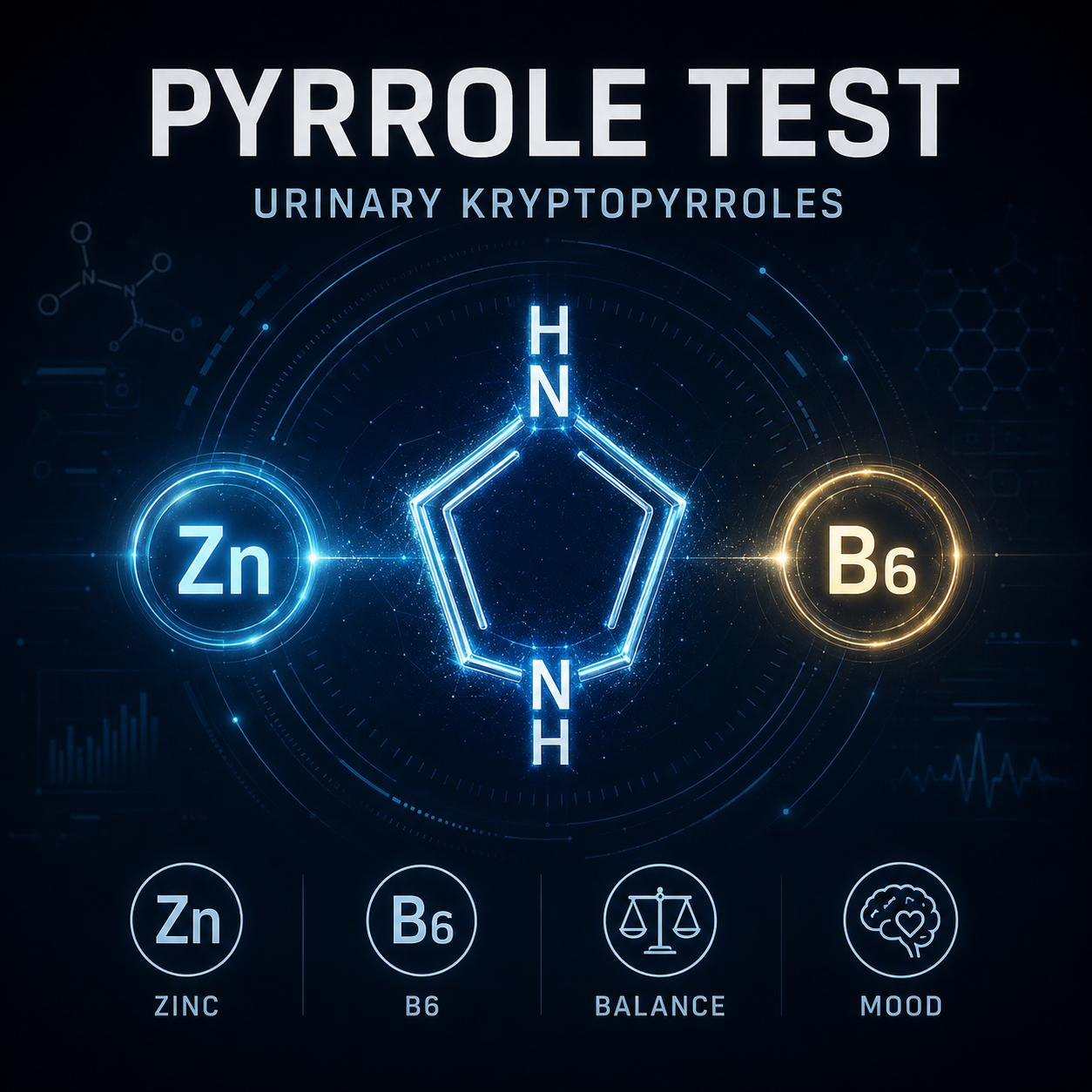
Pyrrole Test


$129.00
CPT 83921 – Organic acid; quantitative
Description
The Pyroluria Test is an at-home urine test measuring urinary pyrroles — a laboratory marker used in the Walsh Approach when evaluating the biochemical pattern commonly called pyroluria or pyrrole disorder.
Pyroluria is associated clinically with characteristic patterns of stress intolerance, inner tension, anxiety, behavioral symptoms, and increased need for zinc and vitamin B6.
The urine test can help determine whether elevated pyrroles support the clinical pattern, but the result is most useful when interpreted together with symptoms, history, zinc status, copper metabolism, and other Walsh biochemical findings.
Not simply an abnormal urine result. The purpose is to determine whether a recognizable zinc/B6 depletion and stress-vulnerability pattern may be contributing to mood, behavioral, or physical symptoms.
What Is Pyroluria?
Pyroluria is the name commonly used for a biochemical pattern associated with elevated urinary pyrrole compounds and characteristic clinical features.
Within the Walsh Approach, increased pyrrole activity is associated with increased requirements for two particularly important nutrients:
Zinc
Neurotransmitters Antioxidants Copper BalanceZinc participates in hundreds of biochemical reactions and is important to neurotransmitter regulation, antioxidant defense, immune function, gastrointestinal health, wound healing, and copper balance.
Vitamin B6
B6 P-5-P NeurotransmittersVitamin B6 is required for numerous enzymatic reactions, including pathways involved in neurotransmitter production and amino-acid metabolism.
The Classic Pyroluria Pattern
Why Test Urinary Pyrroles?
Symptoms can suggest pyroluria, but symptoms alone cannot tell us whether urinary pyrroles are elevated.
The urine test provides an objective laboratory marker that can be considered alongside the clinical history.
Are urinary pyrroles actually elevated at the time of testing?
When Should Pyroluria Be Considered?
No single symptom identifies pyroluria. The pattern becomes more interesting when multiple characteristic features occur together.
Stress & Emotional Pattern
Poor stress tolerance, inner tension, episodic anxiety, emotional reactivity, worsening symptoms during stressful periods, or difficulty recovering after significant stress.
Social & Behavioral Pattern
Social discomfort, preference for a small number of close relationships, withdrawal under stress, behavioral dysregulation, or marked sensitivity to criticism or conflict.
Physical Clues
Poor night vision, stretch marks, delayed wound healing, characteristic skin or nail findings, poor appetite or morning nausea may contribute to the clinical picture.
Nutrient Pattern
Previous low zinc, symptoms suggestive of B6 insufficiency, poor response to stress, or improvement with appropriately targeted zinc and B6 may provide additional clues.
Why Symptoms Often Worsen During Stress
One of the characteristic features attributed to the pyroluria pattern is increased symptom intensity during periods of physical or emotional stress.
Patients may function reasonably well during stable periods but experience a marked increase in anxiety, inner tension, irritability, behavioral symptoms, or other difficulties during major life stress.
A history of symptoms that repeatedly intensify during illness, emotional stress, major transitions, injury, or other physiologic stressors can strengthen the clinical suspicion when other pyroluria features are also present.
At-Home Urine Pyroluria Testing
The Pyroluria Test Kit allows the urine specimen to be collected at home rather than requiring a laboratory visit.
Collect
Follow the laboratory instructions for urine collection and specimen preparation.
Protect
Pyrrole-related analytes are sensitive to specimen handling. Follow the supplied instructions for light protection and temperature control.
Ship
Package and ship the specimen according to the laboratory's directions so it reaches the laboratory under appropriate conditions.
Urinary pyrrole testing is sensitive to collection, light exposure, storage, and shipping conditions. Follow the instructions supplied with your specific laboratory kit rather than substituting general collection instructions.
What If the Pyroluria Test Is Negative?
This is an important question because pyrrole-like symptoms do not necessarily mean that urinary pyrroles will be elevated.
Low zinc, abnormal copper metabolism, methylation abnormalities, nutritional deficiencies, gastrointestinal problems, chronic stress, or other biochemical factors may produce overlapping symptoms.
In particular, copper overload accompanied by low zinc can resemble portions of the pyroluria pattern. If urinary pyrroles are not elevated but the clinical pattern remains strong, copper, zinc, ceruloplasmin, methylation status, and other relevant factors may deserve further evaluation.
Pyroluria, Zinc & Copper Overload
Pyroluria and copper overload frequently intersect clinically because zinc is central to both patterns.
When zinc is chronically inadequate, copper regulation may also become less favorable. This can create a combined pattern in which symptoms reflect both inadequate zinc/B6 status and abnormal copper metabolism.
Pyroluria Assessment
Urinary Pyrroles Zinc B6 / P-5-PFocuses on the pyrrole pattern and its relationship to zinc and vitamin B6 requirements.
Copper Overload Assessment
Copper Ceruloplasmin ZincEvaluates copper metabolism and copper/zinc balance — particularly useful when anxiety, agitation, hormonal sensitivity, or persistently low zinc accompanies pyrrole-like symptoms.
View Copper Overload PanelPyroluria in the Walsh Approach
Pyroluria is one of the biochemical patterns emphasized within the Walsh Approach to mood and behavioral disorders.
The broader Walsh assessment also considers undermethylation, overmethylation, copper overload, and other biochemical or metabolic abnormalities.
Someone with elevated urinary pyrroles may also have copper overload or a methylation abnormality. Identifying the dominant and overlapping patterns is generally more useful than treating each laboratory marker in isolation.
Learn More About Pyroluria & Related Biotypes
Explore the educational sections below to understand how pyrroles, zinc, B6, copper, and methylation can overlap.
Pyroluria Copper Overload UndermethylationPyroluria Test or Comprehensive Biotype Panel?
Urinary Pyrroles Test
Focused TestAppropriate when the primary question is whether elevated urinary pyrroles support a suspected pyroluria pattern.
Comprehensive Biotype Panel
Methylation Copper Zinc Vitamin D CBC / CMPProvides a broader biochemical assessment when the goal is to investigate multiple Walsh patterns rather than pyroluria alone.
The urinary pyrrole test is offered separately so patients who do not have a strong pyroluria pattern do not automatically incur the additional testing cost.
Interpreting the Results
Urinary pyrrole results should be interpreted in the context of the clinical picture rather than used as a stand-alone diagnosis.
Urinary Pyrroles
Does the laboratory result support elevated pyrrole activity?
Zinc + B6
Does the history or laboratory picture suggest increased nutrient requirements or existing deficiencies?
Other Biotypes
Could copper overload, methylation abnormalities, or another biochemical pattern better explain part of the presentation?
What Happens If Pyrroles Are Elevated?
Within a Walsh-oriented nutrient approach, the primary objective is generally to address the nutrient pattern associated with pyroluria rather than simply trying to lower a laboratory number.
Zinc and vitamin B6 — including consideration of its active form, P-5-P — are central to this approach. Antioxidant and other nutrient needs may also be considered depending on the individual's laboratory findings and clinical history.
Zinc and vitamin B6 can both produce problems when used excessively. Nutrient dosing should reflect the individual's laboratory findings, symptoms, other supplements, and overall biochemical pattern.
Need Help Putting the Result Into Context?
A positive or negative urinary pyrrole result is only one piece of the biochemical assessment. The result can be reviewed alongside zinc, copper, ceruloplasmin, methylation markers, symptoms, and questionnaire findings to determine whether pyroluria appears to be a major contributor.
Patients seeking a broader Walsh assessment may also consider the Comprehensive Biotype Panel and Consultation with Biotype Report.
20-Minute Consultation Comprehensive Biotype ConsultationAdditional information
| Lab Test | Diagnostic Test |
|---|