
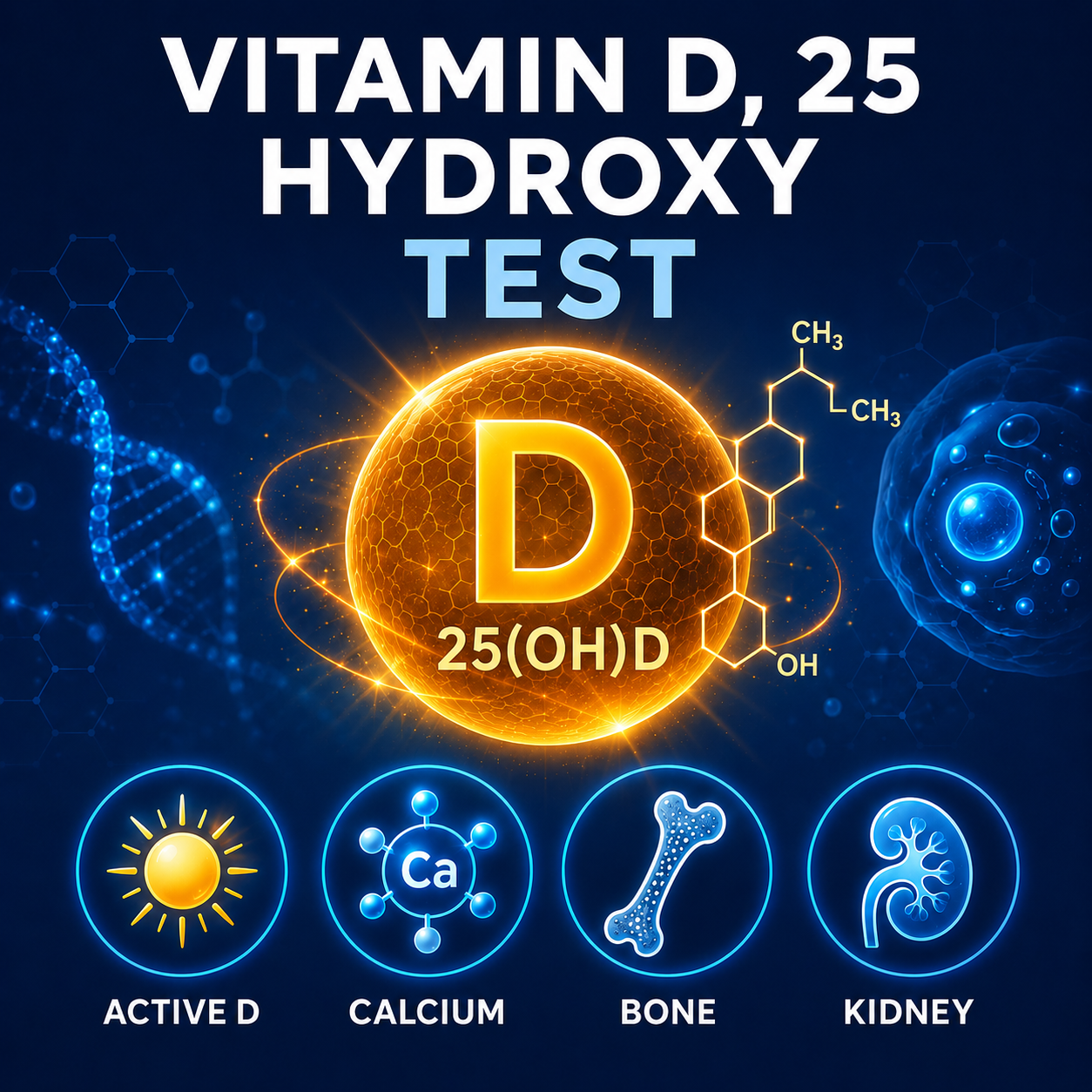
Vitamin D 25-Hydroxy

$35.00
The Vitamin D, 25-Hydroxy Blood Test measures the primary circulating storage form of vitamin D and is the preferred blood test for evaluating overall vitamin D status.
Vitamin D is important for much more than bone health. It functions as a hormone-like signaling molecule involved in immune regulation, inflammation, serotonin biology, mood, sleep, muscle function, brain health, and gene expression.
Within the Walsh Approach, vitamin D deficiency is considered an important biochemical abnormality in mood and behavioral disorders because vitamin D signaling may influence serotonin production and serotonin-related gene expression. Testing is therefore useful in patients with depression, seasonal affective symptoms, anxiety, fatigue, poor sleep, frequent infections, inflammation, low sun exposure, autoimmune concerns, or poor response to nutritional therapy.
For many functional-medicine patients, a practical treatment goal is often approximately 50–100 ng/mL, while recognizing that conventional laboratory and guideline thresholds may use lower targets and that dosing should be individualized.
Description
The Vitamin D, 25-Hydroxy Blood Test measures the body's primary circulating storage form of vitamin D and is the preferred laboratory test for determining whether vitamin D levels are adequate.
Vitamin D functions as much more than a bone-health nutrient. Its active hormonal form interacts with vitamin D receptors throughout the body and influences immune regulation, inflammatory signaling, muscle function, brain chemistry, gene expression, serotonin pathways, and cellular resilience.
This makes vitamin D particularly relevant in patients with depression, seasonal affective symptoms, low mood, fatigue, poor sleep, frequent infections, immune dysfunction, inflammation, low sun exposure, muscle weakness, or poor response to nutritional therapy.
Within the Walsh Approach, vitamin D deficiency is considered an important biochemical finding in mood and behavioral disorders and is commonly evaluated alongside zinc, copper, whole-blood histamine, homocysteine, CBC, CMP, and other biochemical markers.
Labcorp Vitamin D, 25-Hydroxy — Test #081950
Serotonin Biology
Vitamin D signaling has been linked experimentally to regulation of serotonin-related genes, including pathways involved in serotonin synthesis and transport.
Immune Regulation
Vitamin D receptors are present on many immune cells, and adequate vitamin D is important for normal innate and adaptive immune function.
Sunlight, Sleep & SAD
Vitamin D commonly falls during periods of reduced sun exposure and may be one biochemical factor worth assessing in patients with winter-pattern mood or energy changes.
What Does the Vitamin D 25-Hydroxy Blood Test Measure?
The test measures 25-hydroxyvitamin D, or 25(OH)D, also called calcidiol.
Vitamin D from sunlight, food, or supplements is first converted in the liver into 25-hydroxyvitamin D. This form circulates in relatively large quantities and acts as the body's principal vitamin D reservoir.
For that reason, 25-hydroxyvitamin D is the standard test used to determine overall vitamin D nutritional status.
25-Hydroxy Vitamin D vs 1,25-Dihydroxy Vitamin D
25-Hydroxy Vitamin D
The primary circulating storage form and the preferred test for determining whether vitamin D is deficient, insufficient, adequate, or potentially excessive.
1,25-Dihydroxy Vitamin D
The active hormonal form, or calcitriol. It is tightly regulated by the kidneys, parathyroid hormone, calcium, phosphate, and FGF-23 and is used for more specialized disorders rather than routine vitamin D assessment.
If the goal is immunity, mood, sleep, depression, seasonal symptoms, nutritional status, or Walsh Protocol assessment, 25-hydroxy vitamin D is usually the appropriate test.
Why Vitamin D Is Important for Serotonin Function
Vitamin D receptors and the enzyme responsible for producing active vitamin D are found in several brain regions involved in mood, cognition, and behavior.
Experimental research suggests that active vitamin D can influence serotonin biology through several mechanisms, including regulation of:
- TPH2, an enzyme involved in serotonin synthesis in the brain
- Serotonin transporter activity
- Monoamine metabolism
- Gene expression through vitamin D receptors
This provides a biologically plausible connection between vitamin D status and serotonin signaling.
Vitamin D is not a serotonin blood test and does not diagnose low serotonin. Its value is in identifying a potentially correctable nutrient and hormone-related factor that may influence serotonin pathways and brain function.
Vitamin D Testing in the Walsh Protocol
The Walsh Approach emphasizes that psychiatric and behavioral symptoms may be influenced by biochemical abnormalities that affect neurotransmitter activity and gene expression.
Vitamin D deficiency is one of the abnormalities evaluated because vitamin D signaling can influence:
- Serotonin-related pathways
- Gene transcription
- Immune regulation
- Inflammatory signaling
- Brain development and function
- Cellular energy and muscle function
Vitamin D status is therefore particularly relevant in patients being evaluated for:
- Depression
- Seasonal mood symptoms
- Anxiety
- ADHD or behavioral concerns
- Autism-spectrum or developmental concerns
- Fatigue
- Sleep disturbance
- Inflammatory or immune symptoms
Vitamin D and Undermethylation
Vitamin D does not directly diagnose undermethylation, but it can be an important supporting factor in an undermethylated patient.
Classic Walsh undermethylation may involve altered serotonin transporter expression and relatively reduced synaptic serotonin activity.
Vitamin D is relevant because vitamin D receptor signaling interacts with genes involved in serotonin biology.
Serotonin Signaling
Walsh-oriented treatment seeks to normalize the biochemical environment affecting serotonin activity rather than simply supplying neurotransmitter precursors.
Receptor & Gene Support
Adequate vitamin D provides the hormonal signaling required for vitamin-D-receptor-mediated gene regulation, including pathways relevant to serotonin.
This is why vitamin D is frequently measured as part of a broader Walsh biochemical assessment rather than treated as an isolated vitamin deficiency.
Vitamin D Blood Test for Depression
Low vitamin D levels are commonly found in populations with depression, although association does not prove that vitamin D deficiency is the cause of depression.
Testing can nevertheless be useful because true deficiency is common and potentially correctable.
Vitamin D deserves particular consideration when depression occurs with:
- Low sun exposure
- Winter worsening
- Fatigue
- Poor sleep
- Muscle weakness
- Inflammatory symptoms
- Low dietary vitamin D intake
- Malabsorption
Supplementation studies for depression have produced mixed results, so vitamin D should not be presented as a stand-alone antidepressant treatment.
Vitamin D and Seasonal Affective Disorder (SAD)
Vitamin D levels commonly fall during winter because ultraviolet-B exposure decreases.
Winter-pattern seasonal affective disorder also involves changes in circadian rhythm, serotonin activity, melatonin, and daylight exposure.
Low vitamin D is common in people with winter-pattern SAD, but vitamin D supplementation alone has not consistently been shown to treat SAD.
Testing is still useful because it helps determine whether vitamin D deficiency is one correctable factor contributing to the seasonal biochemical picture.
Patients with clear winter-pattern depression should also consider established treatments such as appropriate light therapy and clinical assessment rather than relying exclusively on vitamin D.
Vitamin D and Sleep
Vitamin D receptors are present in brain regions involved in sleep regulation, and low vitamin D status has been associated in observational studies with poor sleep quality and sleep disturbance.
Vitamin D may also interact indirectly with sleep through:
- Serotonin pathways
- Melatonin biology
- Inflammation
- Musculoskeletal discomfort
- Circadian signaling
This makes vitamin D worth evaluating in patients with sleep problems, particularly when poor sleep occurs with fatigue, low mood, limited sun exposure, or inflammatory symptoms.
Vitamin D deficiency is not the only cause of insomnia, and correcting vitamin D does not guarantee that a sleep disorder will resolve.
Vitamin D and Immune Function
Vitamin D receptors are expressed by multiple immune-cell populations.
Vitamin D participates in regulation of both innate and adaptive immune responses and can influence:
First-Line Defense
Vitamin D signaling influences antimicrobial peptides and components of the body's early immune response.
Immune Balance
Vitamin D can influence T-cell and B-cell signaling and broader immune regulation.
Inflammatory Signaling
Adequate vitamin D status may help support normal inflammatory regulation rather than simply stimulating immune activity.
Who Should Consider a Vitamin D Blood Test?
The Vitamin D 25-Hydroxy Blood Test may be useful for patients with:
Neuropsychiatric Concerns
- Depression
- Seasonal mood changes
- Brain fog
- Poor concentration
- Behavioral concerns
Immune & Inflammatory Concerns
- Frequent infections
- Autoimmune concerns
- Chronic inflammation
- Allergic/immune stress
Physical Symptoms
- Fatigue
- Muscle weakness
- Poor exercise recovery
- Bone discomfort
- Low sun exposure
What Is an Ideal Vitamin D Level?
There is no single universally accepted “ideal” vitamin D concentration for every patient.
Conventional guidelines generally agree that clearly low 25-hydroxy vitamin D should be corrected, but recommendations differ regarding the upper end of an optimal range.
Deficiency & Adequacy
Levels below approximately 20 ng/mL are commonly considered deficient in many clinical frameworks. Values above this may be sufficient for basic skeletal needs in many patients.
Approximately 50–100 ng/mL
In functional and Walsh-oriented practice, a higher range may be targeted when vitamin D is being optimized for broader neurologic, immune, or metabolic purposes.
A target of 50–100 ng/mL should be viewed as a clinical target rather than a universally established guideline range. Levels and dosing should be individualized, particularly when calcium metabolism, kidney disease, granulomatous disease, hyperparathyroidism, or high-dose supplementation is involved.
How Much Vitamin D Should I Take?
Vitamin D dose should be based on the measured level rather than automatically prescribing the same amount to everyone.
Factors affecting dose requirements include:
- Baseline 25-hydroxy vitamin D level
- Body weight and body fat
- Sun exposure
- Skin pigmentation
- Dietary intake
- Gastrointestinal absorption
- Kidney and liver function
- Medications
- Individual response to supplementation
Common maintenance doses are often in the range of 1,000–4,000 IU vitamin D3 daily, but deficient patients may require individualized short-term replacement strategies under clinical supervision.
The dose should follow the blood level. Higher-dose vitamin D should be monitored rather than continued indefinitely without repeat testing.
When Should Vitamin D Be Retested?
After beginning or substantially changing vitamin D supplementation, repeat testing is commonly considered after approximately 8–12 weeks.
This allows enough time for the circulating 25-hydroxy vitamin D level to approach a new steady state.
Retesting can help determine:
- Whether the dose is adequate
- Whether absorption appears normal
- Whether the level is rising too quickly
- Whether maintenance dosing should be adjusted
Why Magnesium Matters When Taking Vitamin D
Magnesium is involved in vitamin D metabolism and in many of the ATP-dependent reactions required for normal cellular function.
Patients with low magnesium may have difficulty achieving the expected biochemical response to vitamin D supplementation.
This is one reason RBC magnesium can be useful alongside vitamin D testing in patients with:
- Fatigue
- Muscle cramps
- Poor sleep
- Stress intolerance
- Mitochondrial concerns
- Poor response to vitamin D supplementation
Vitamin D, Zinc and the Walsh Approach
Vitamin D is often interpreted alongside zinc because both nutrients are important for immune function, gene expression, and cellular signaling.
Within a Walsh-oriented assessment, common accompanying tests may include:
- Plasma zinc
- Serum copper
- Ceruloplasmin
- Whole-blood histamine
- Homocysteine
- Magnesium RBC
- CBC and CMP
The purpose is to identify the larger biochemical pattern rather than treating vitamin D as an isolated abnormality.
Vitamin D and Malabsorption
Persistently low vitamin D despite supplementation can be a clue to impaired absorption.
Potential causes include:
- Celiac disease
- Inflammatory bowel disease
- Pancreatic insufficiency
- Previous bariatric or gastrointestinal surgery
- Other fat-malabsorption disorders
When vitamin D remains unexpectedly low, gastrointestinal and nutritional evaluation may be appropriate rather than simply continuing to increase the dose.
What Can the Vitamin D Blood Test Help Answer?
- Is vitamin D deficient?
- Could low vitamin D be contributing to immune or inflammatory vulnerability?
- Could vitamin D status be relevant to depression or seasonal symptoms?
- Is vitamin D one factor worth considering in poor sleep or fatigue?
- Is supplementation actually needed?
- Is the current supplement dose sufficient?
- Is the vitamin D level becoming excessive?
- Could poor absorption explain a persistently low level?
- Should magnesium, calcium, PTH, or broader metabolic testing be considered?
Vitamin D 25-Hydroxy Test: Commonly Ordered With
Zinc + Copper + Ceruloplasmin
Provides broader information about mineral balance relevant to mood, immune function, oxidative stress, and Walsh biotype assessment.
Magnesium RBC
Provides an intracellular magnesium assessment relevant to ATP production, muscle function, sleep, and vitamin D metabolism.
hs-CRP
Helps determine whether systemic low-grade inflammatory activity is also present.
Whole-Blood Histamine + Homocysteine
Provides additional Walsh-oriented information about methylation and biochemical patterns associated with mood disorders.
Calcium + PTH
Useful when vitamin D abnormalities raise questions about calcium regulation, parathyroid function, or higher-dose supplementation.
Celiac / GI Testing
Useful when vitamin D remains low despite apparently adequate supplementation.
Before Your Vitamin D Blood Test
Labcorp Vitamin D, 25-Hydroxy — Test #081950
- This is a blood test performed through Labcorp.
- Fasting is generally not required solely for vitamin D testing.
- Tell your clinician the amount of vitamin D you currently take.
- Include vitamin D from multivitamins, calcium products, cod-liver oil, and combination supplements when calculating total intake.
- Provide information about kidney disease, hyperparathyroidism, sarcoidosis, other granulomatous disease, or a history of high calcium.
- Do not discontinue medically necessary supplements or medications simply for testing unless instructed by your clinician.
How the Vitamin D Blood Test Works
Order the Test
A Labcorp requisition and collection instructions are provided.
Have Your Blood Drawn
Visit an appropriate Labcorp patient service center for specimen collection.
Interpret the Level
The result is reviewed with symptoms, sun exposure, supplement dose, immune and mood concerns, medications, calcium metabolism, and other biochemical findings.
Adjust and Retest
If replacement is needed, supplementation can be individualized and the level rechecked after an appropriate interval.
Frequently Asked Questions About Vitamin D Testing
Which vitamin D test should I order: 25-hydroxy or 1,25-dihydroxy?
For routine vitamin D status, supplementation, immunity, mood, sleep, seasonal symptoms, and Walsh-oriented assessment, 25-hydroxy vitamin D is generally the correct test. 1,25-dihydroxy vitamin D is used mainly for specialized calcium, parathyroid, kidney, or vitamin D metabolism disorders.
What vitamin D level should I aim for?
Targets vary by clinical philosophy. Many conventional frameworks consider levels around 20–30 ng/mL or higher adequate for basic skeletal needs. In functional and Walsh-oriented practice, approximately 50–100 ng/mL may be used as an individualized target for broader physiologic optimization. Higher targets should be monitored rather than assumed to be appropriate for everyone.
Can vitamin D help depression?
Vitamin D has biologic connections to serotonin and brain function, and low levels are common in some people with depression. However, supplementation trials have produced mixed results. Correcting a documented deficiency is reasonable, but vitamin D should not be considered a stand-alone treatment for depression.
How does vitamin D affect serotonin?
Experimental evidence suggests that active vitamin D can influence genes involved in serotonin synthesis and transport. This provides a biologic rationale for maintaining adequate vitamin D status, particularly in Walsh-oriented assessments of mood and serotonin function.
Is vitamin D useful for seasonal affective disorder?
Low vitamin D is common during winter and in some patients with seasonal affective disorder. However, trials of vitamin D as a treatment for SAD have been inconsistent. Testing can identify deficiency, while established SAD treatments such as appropriate light therapy may still be required.
Can low vitamin D affect sleep?
Low vitamin D has been associated with poorer sleep in observational research, and vitamin D signaling interacts with brain and circadian pathways. Sleep disorders have many possible causes, so testing identifies one potentially correctable factor rather than establishing the cause.
Does vitamin D improve immunity?
Vitamin D is important for normal immune regulation, including innate and adaptive immune responses. Adequate vitamin D supports normal immune function, but very high doses should not be viewed as a way to indiscriminately “boost” immunity.
How much vitamin D should I take if my level is low?
Dose depends on the starting level, body size, sun exposure, absorption, medications, and treatment goal. Many maintenance regimens use approximately 1,000–4,000 IU of vitamin D3 daily, while documented deficiency may require individualized replacement and repeat testing.
How long after starting vitamin D should I retest?
Approximately 8–12 weeks is a practical interval after starting or substantially changing supplementation, although timing can be individualized.
Can too much vitamin D be harmful?
Yes. Excess vitamin D can contribute to hypercalcemia and related complications. Higher-dose supplementation should therefore be monitored, especially in patients with kidney disease, abnormal calcium metabolism, hyperparathyroidism, or granulomatous disease.
Why might my vitamin D remain low even though I take supplements?
Possible reasons include inadequate dose, inconsistent use, obesity, poor absorption, celiac disease, gastrointestinal disorders, certain medications, or differences in vitamin D metabolism. Persistently low levels deserve investigation rather than unlimited dose escalation.
Is vitamin D part of the Walsh Protocol?
Yes. Walsh-oriented assessment recognizes vitamin D deficiency as one biochemical abnormality that may influence brain function, immune regulation, gene expression, and serotonin-related pathways. It is interpreted together with the larger biochemical pattern rather than in isolation.